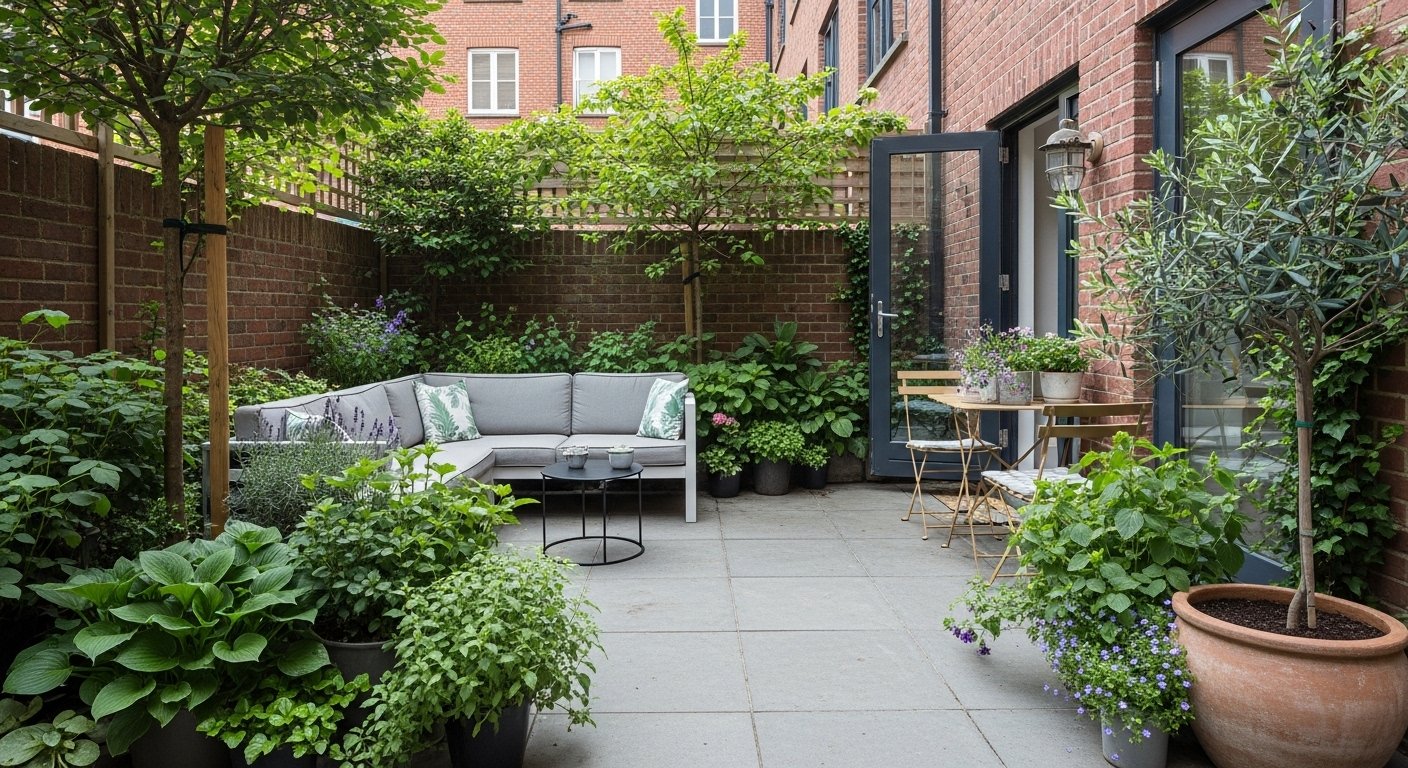
I used to step onto my tiny patio and feel boxed in. Potted plants felt like obstacles. The rug and furniture made everything look heavy.
I kept tweaking placement until it felt airy. Small changes made the space read larger and lighter. You’ll see how to breathe room into tight outdoor spots without rearranging your whole life.
How to Make A Small Patio Garden Look Bigger And Brighter
This is the method I use whenever a patio feels tight. You’ll learn how to open sightlines, add light, and balance scale so the space reads larger and more inviting.
What You’ll Need
- White ceramic planter, 8-inch (glossy)
- Tall bamboo trellis, 6 ft
- Outdoor mirror, 24 x 36-inch framed
- Warm white solar string lights
- Neutral jute outdoor rug, 3 x 5 ft
- Slim rectangular planter, narrow profile
- Trailing petunia 4-pack (or similar trailing annuals)
Step 1: Brighten the base and simplify the palette
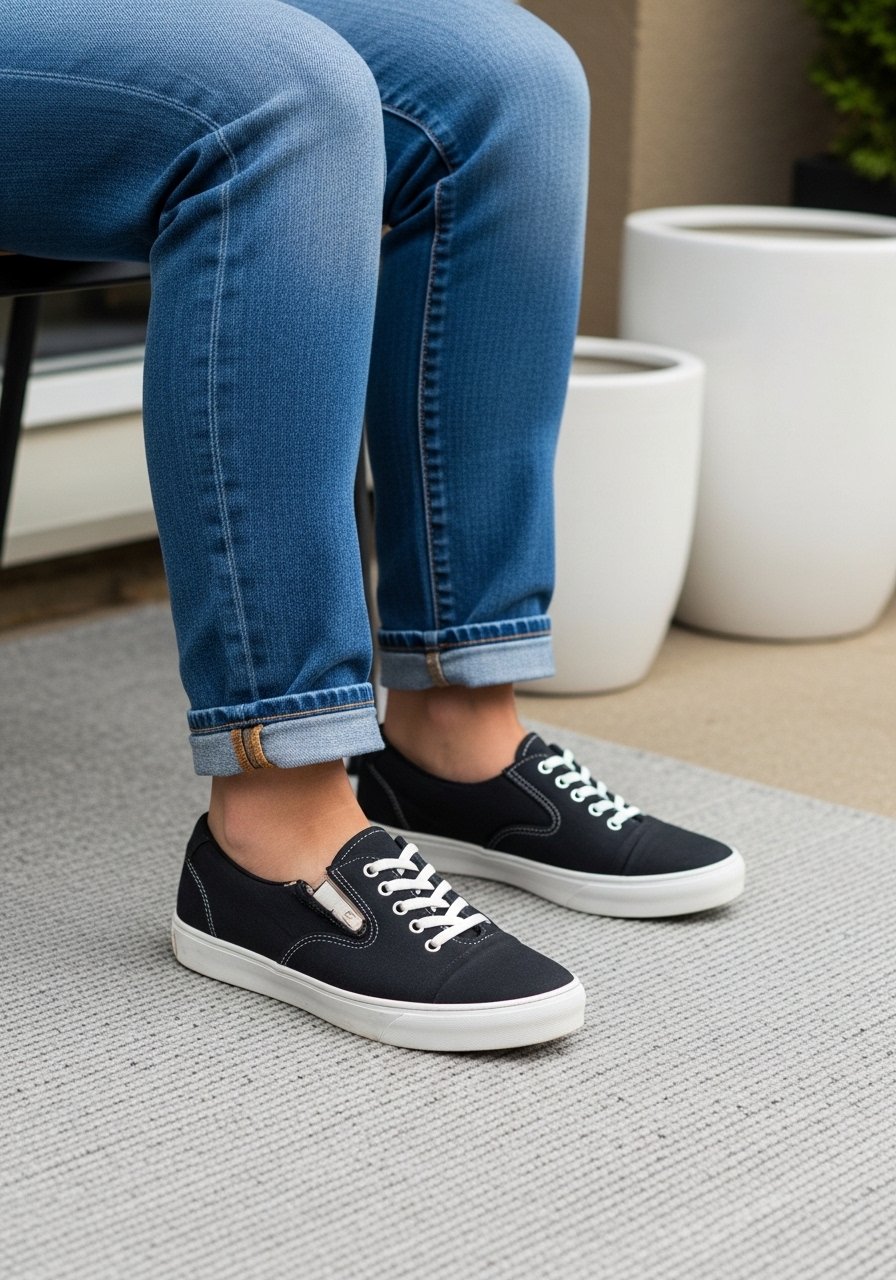
I start with the ground. A neutral, light rug makes the floor feel continuous rather than chopped up. I choose one light pot color to repeat. The result is calmer and visually larger because my eye doesn't stop at every different surface.
People often miss how much the floor anchors the space. One small mistake is using a busy, dark rug that fights with plants. Keep the base simple and let the greenery read as the pattern.
Step 2: Lift your eyes with verticals and reflections
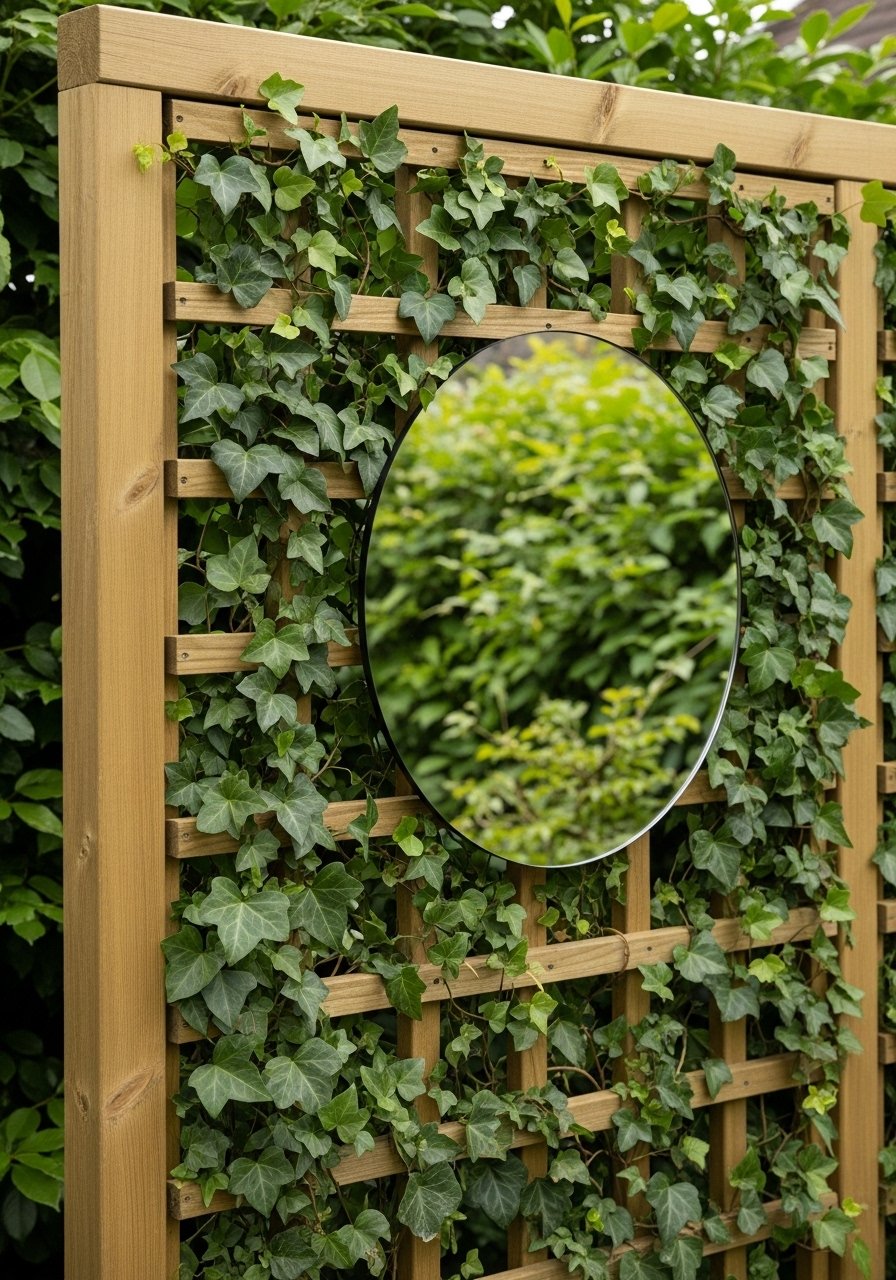
I add height to pull the eye up. A slim trellis or a tall planter makes the patio feel taller. Then I hang a mirror where it reflects an attractive corner of the garden. That doubled view tricks the eye into depth.
Many people hang mirrors facing clutter. A useful insight: angle the mirror to catch greenery or sky, not a trash bin. Don’t cram too many verticals together; that turns openness into clutter.
Step 3: Layer plants by scale, not quantity
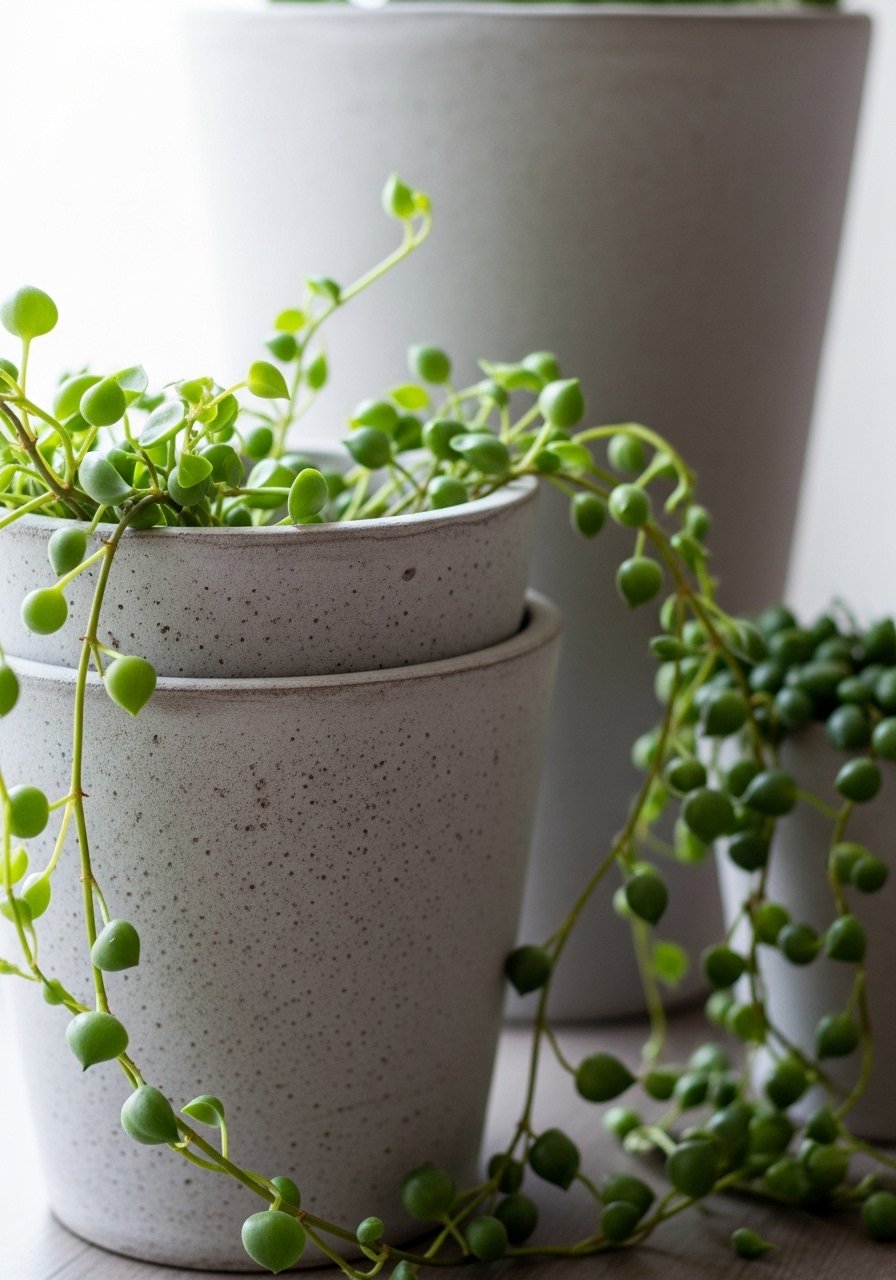
I work in three heights: tall background plants, medium pots, and low trailing greenery. That layered rhythm creates depth without needing more pots. The space then reads as a series of planes instead of a single crowded surface.
A lot of gardeners overplant with random sizes. The insight I learned: repeat a shape or color to unify the scene. Avoid mixing too many odd pot sizes; that makes things look accidental rather than intentional.
Step 4: Create a focal-led flow
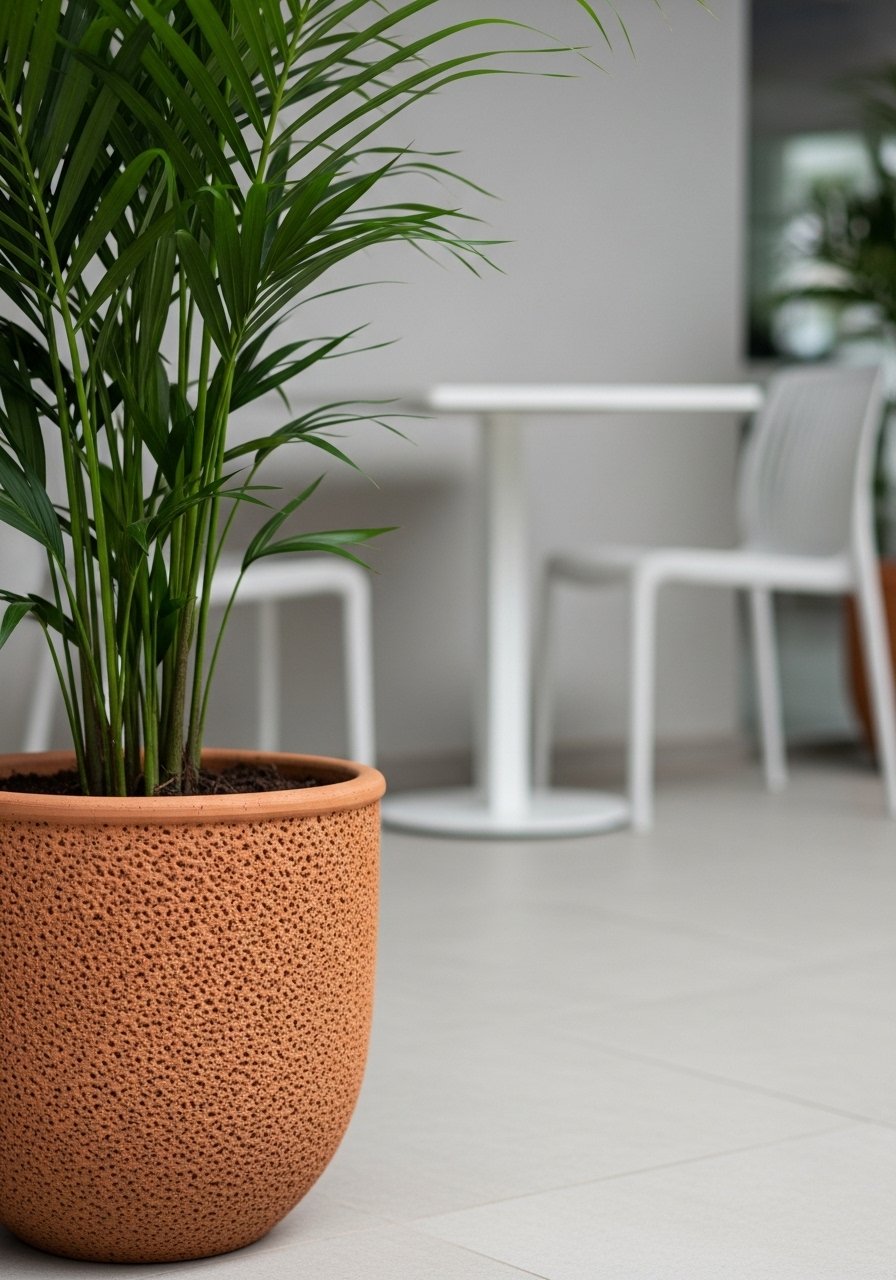
I place one stronger focal pot off-center. It gives the eye somewhere to land and helps the rest of the patio read as background. I leave a small area intentionally empty so the eye can move through the space.
People forget negative space. Too many focal points compete and shrink the feel. Don’t push the main pot into the middle; that feels crowded. Off to the side is breathing room.
Step 5: Use soft light and seasonal color sparingly
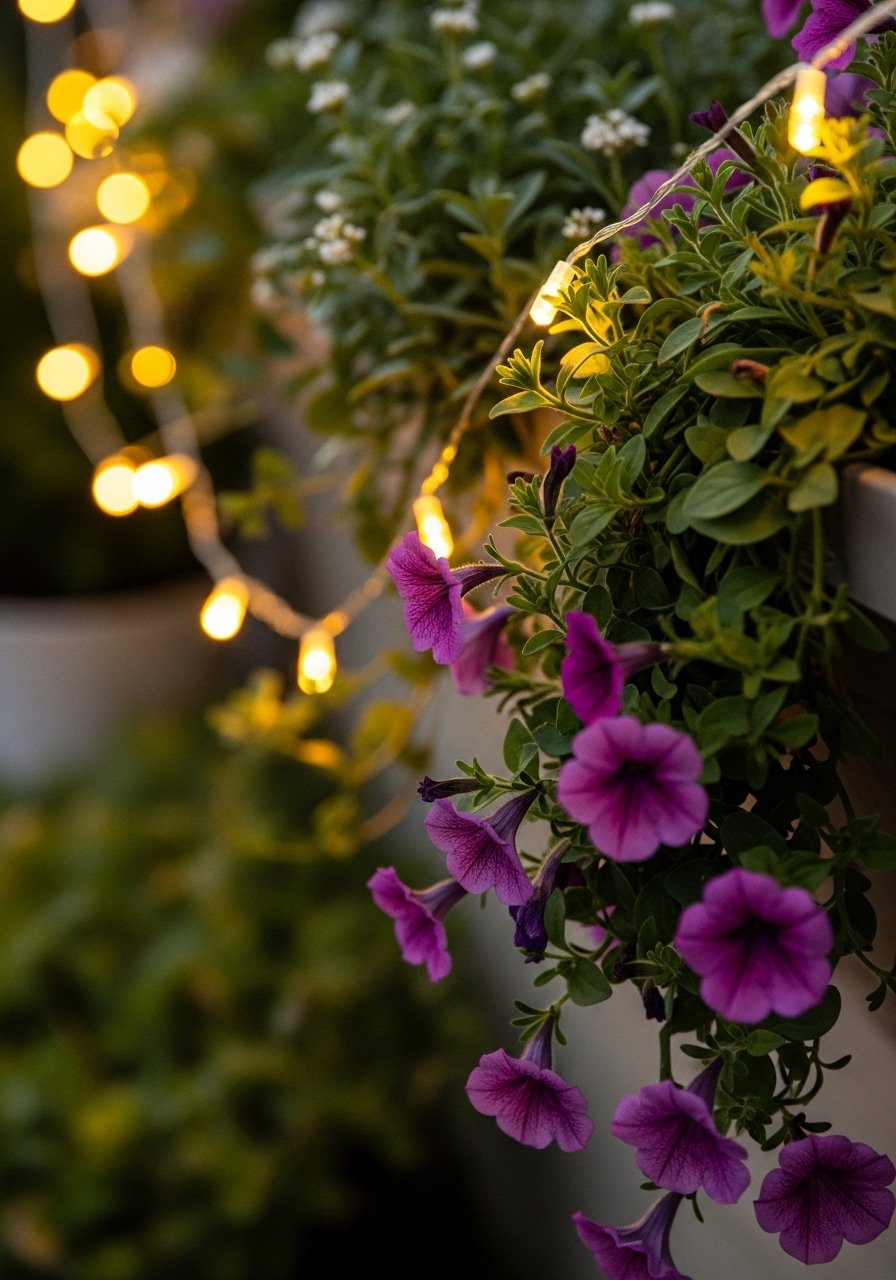
I add low, warm light at eye level and a few pops of seasonal color in trailing pots. Lights that sit above or behind plants give a feeling of depth. A few coordinated blooms make the space feel lively without overwhelming it.
People often put lights in a tangle or use too many bright colors. The insight: keep color limited to two or three tones and place lights where they reflect in the mirror. Avoid harsh, overhead lighting that flattens the space.
Plant Choices That Open Space
I pick plants that feel airy. Grasses, narrow-leaved salvias, and trailing petunias are my go-tos. They don’t block sightlines the way big-leafed shrubs do.
Repeat the same foliage shape two or three times. It creates rhythm. Rhythm is what tricks the eye into length and depth.
Lighting and Reflection
Evening light matters. I favor warm solar strings and a single bulb hidden in foliage. The mirror catches that glow and doubles it.
Place mirrors to reflect greenery or sky. Never mirror clutter. Small adjustments to angle make a big visual difference.
Keeping It Lived-In Without Clutter
I leave a spot for a chair and a cup. The garden should invite use. That keeps it from becoming a staged plant shelf.
Every few weeks I step back and remove one item. If something feels like visual noise, it goes. Less often equals more room to breathe.
Final Thoughts
Start with one clear change: the rug, a mirror, or a single tall planter. I promise small edits add up.
Work in layers and leave breathing room. The patio will feel brighter and more open fast.
Be kind to yourself. Gardening is making choices, not perfection.
Leave a Reply