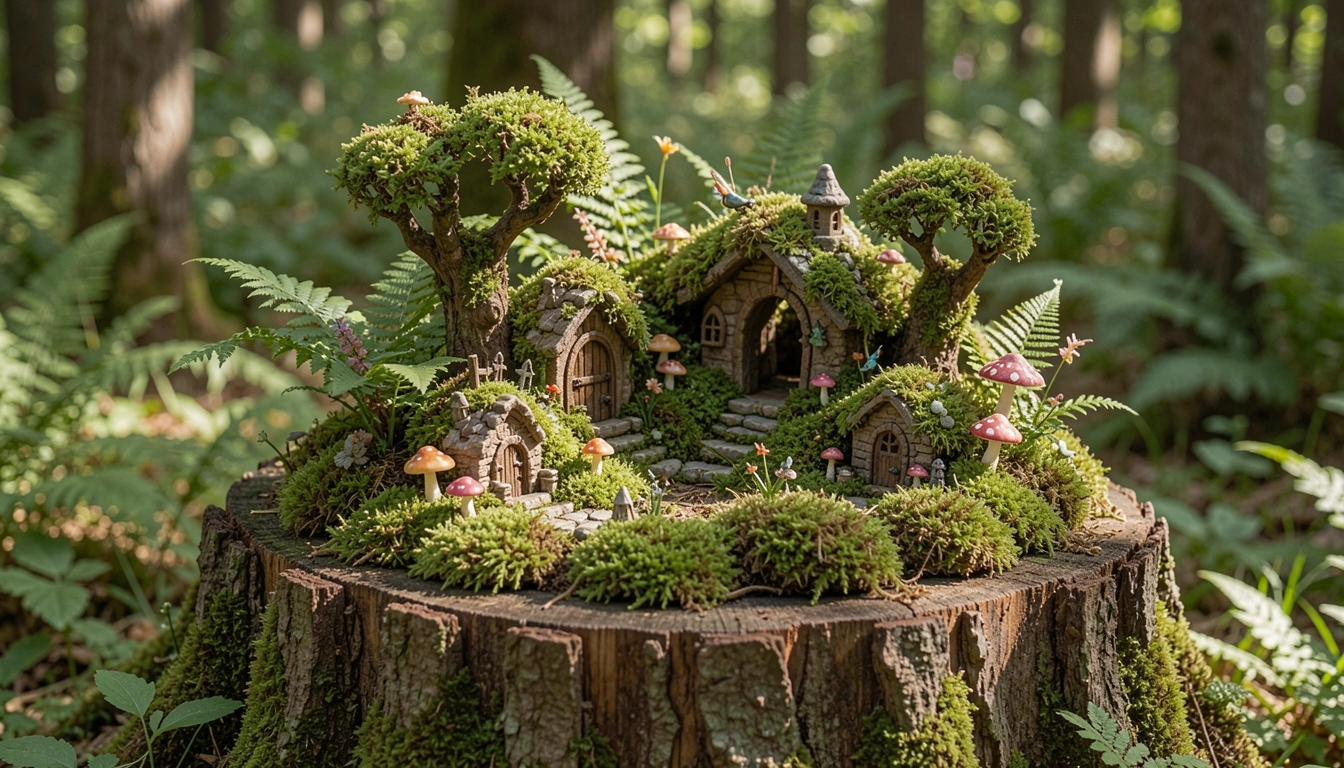
I stared at that old stump in the corner. It was just sitting there, weathered and empty. The yard felt off around it, like a missing piece. One afternoon, I decided to try a fairy garden. It changed the whole spot without much fuss.
No big plans. Just layers that settled in naturally.
Now it draws the eye. Feels right.
How to Make Fairy Garden on a Stump
This shows you how I fill a stump to make a fairy garden that blends into the yard. It ends up balanced and comfortable. You can do it in an afternoon.
What You’ll Need
- Miniature resin fairy house, 4-inch tall
- Tiny wooden fairy bench, 2-inch scale
- Preserved sheet moss, 8×12 inches
- Assorted mini succulents, 6-pack
- Natural river pebbles, 1-pound bag
- Mini twig ladder, 3-inch
- Solar-powered fairy lights, 10-foot strand
- Tiny clay pots, 1-inch set of 4
Step 1: Clean and Map the Stump
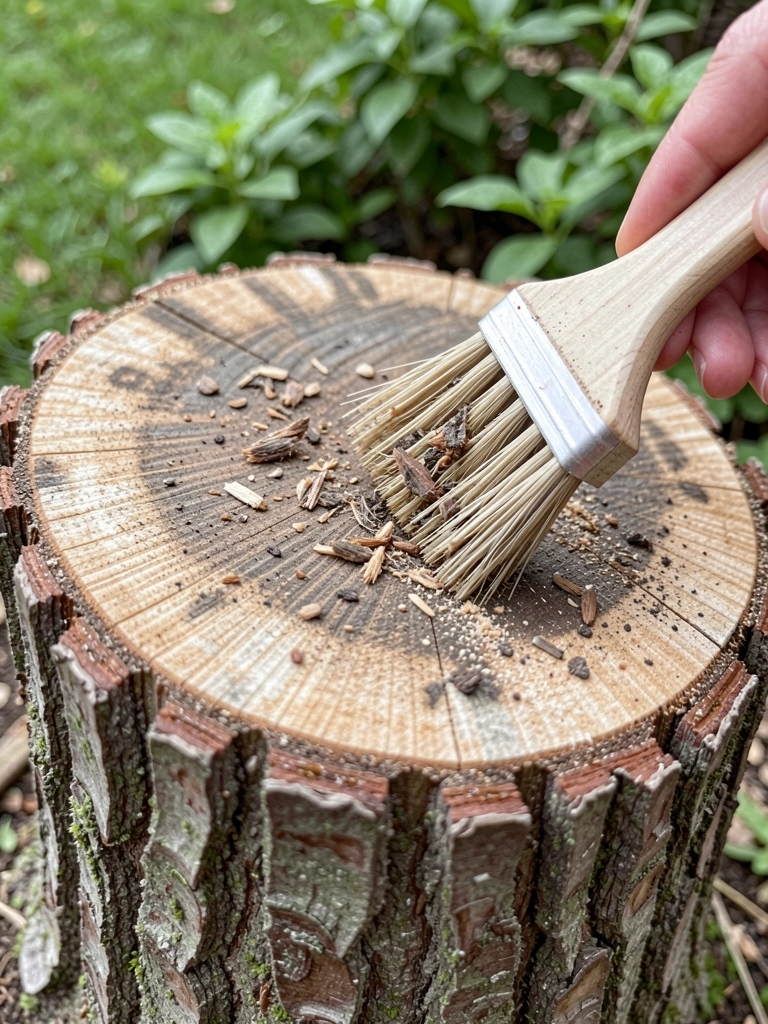
I start by brushing off dirt and loose bark. This reveals the stump's shape—flats, dips, curves. Why? It sets the base for everything to sit steady.
Visually, the stump wakes up. Gray wood turns warm brown. People miss how dips hold soil best. Don't scrub too hard; keep some texture for grip.
I step back. See where the main flat is. That’s your anchor spot.
Step 2: Layer in the Moss Base
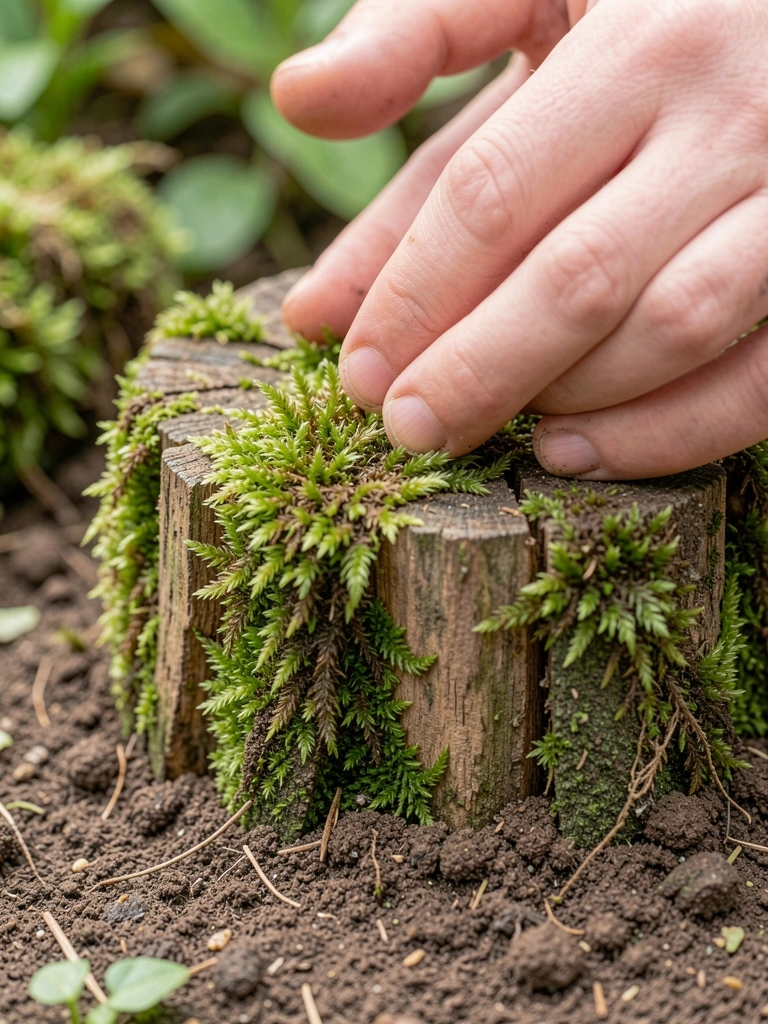
Next, I tuck moss into dips and flats. It softens the wood and holds moisture. This makes the top feel alive right away.
The change? Stump goes from bare to cushioned green. Insight: Moss bridges gaps between levels. Avoid piling it thick; let it breathe or it molds.
I press gently. Pat down. Now it invites the next pieces.
Step 3: Place the Main Structures
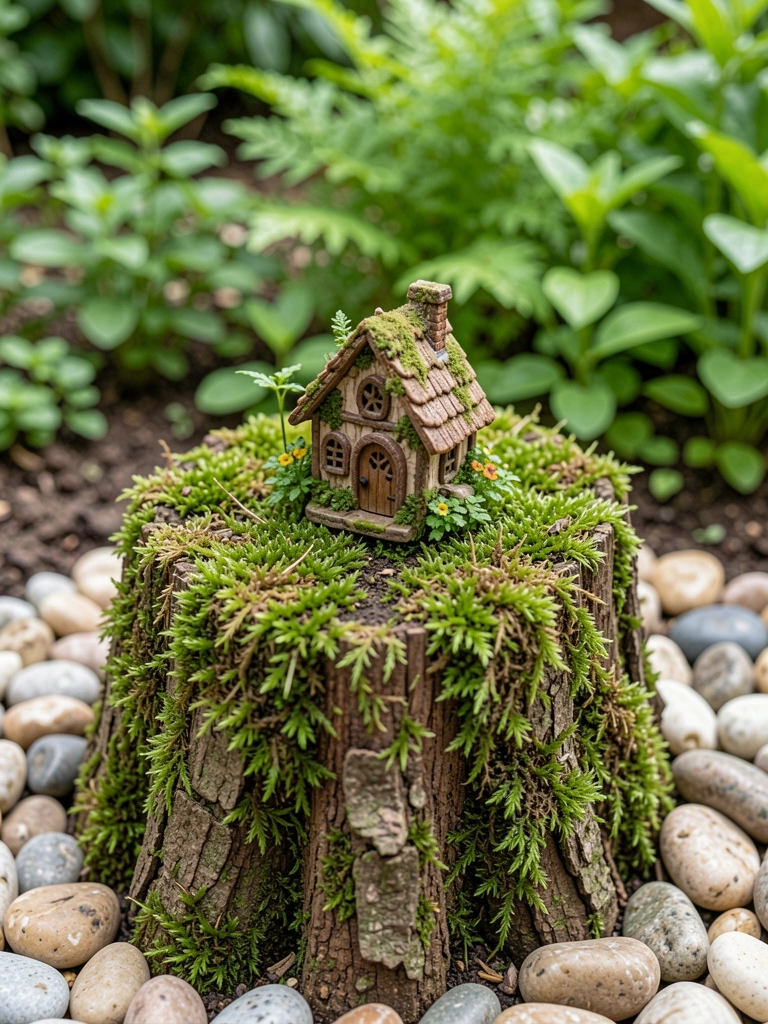
I set the fairy house on the main flat first. Then bench nearby, ladder leaning close. Why? They create a lived-in path feel.
Now it has focal points. Wood pops against green. Most miss angling pieces for flow. Don't center everything; offset for balance.
I nudge until it settles. Feels cozy already.
Step 4: Add Plants and Pebbles
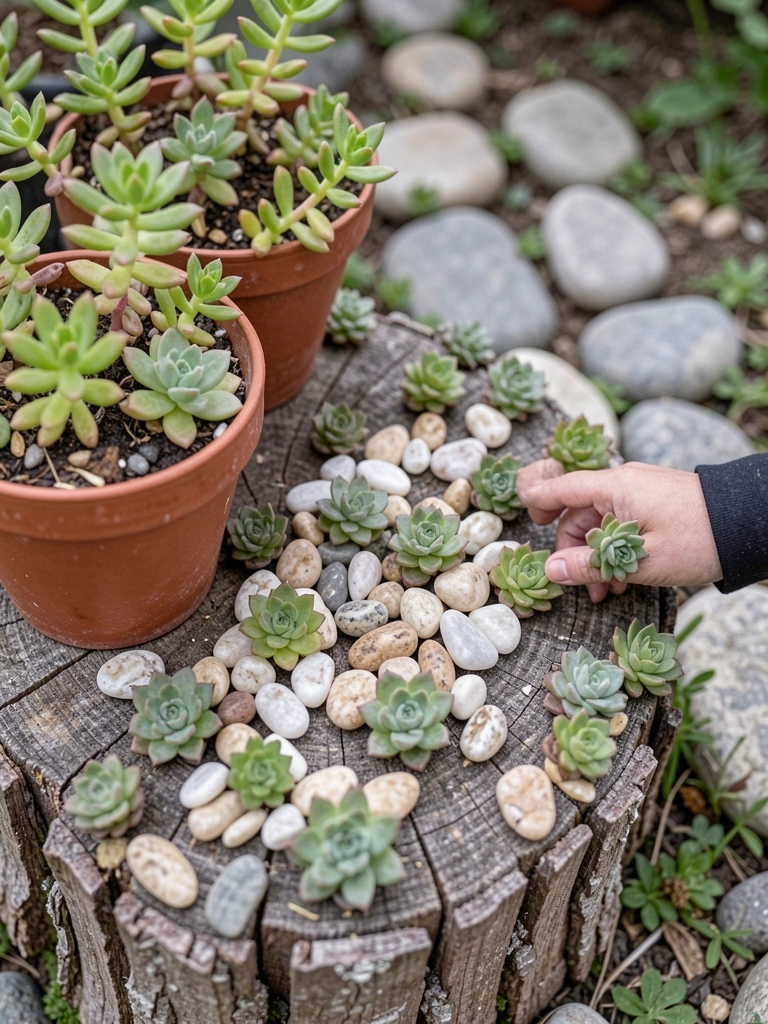
Succulents go in tiny pots around edges. Pebbles line paths between structures. This grounds it all.
Visual shift: Layers build depth. Stump feels full but not crowded. Key insight: Plants add height variation. Skip pebbles if wet area; they shift.
I cluster loosely. Step back. Balance checks out.
Step 5: Finish with Lights and Details
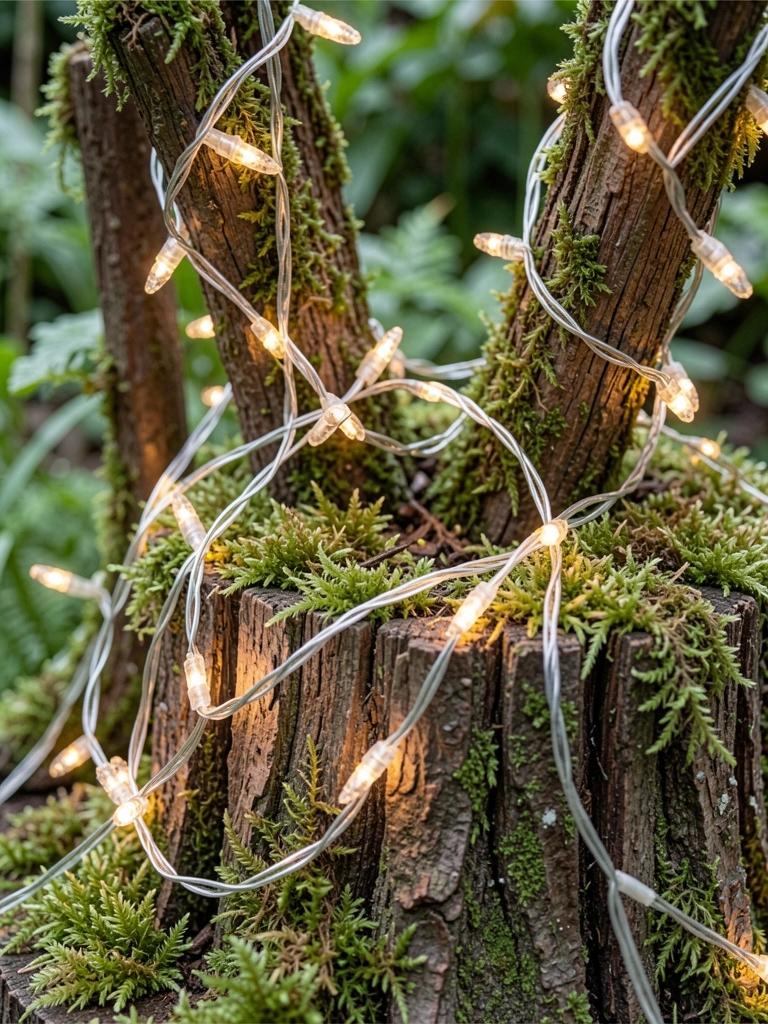
Last, I weave lights through moss and around pieces. Solar ones tuck easy. Why? Evening glow makes it warm.
It ties everything. Soft light on textures. People overlook hiding wires in moss. Don't overload; a few strands enough.
Now it's done. Sits quiet in the yard.
Choosing Plants That Last on a Stump
Stumps dry out fast. I pick what thrives there.
Moss and sedums hold up. They creep without overwhelming.
- Sheet moss for base: Stays green, no water fuss.
- Mini hens-and-chicks: Tough, spread slow.
- Baby tears if shaded: Fills cracks soft.
Test one plant first. See how it settles.
Handling Weather and Wear
Rain hits stumps hard. I check after storms.
Moss might shift. Press back in.
- Clear dead bits weekly.
- Top with fresh moss yearly.
- Lights stay put in dry spots.
It weathers to look more real over time.
Blending with Your Yard
Fairy gardens stand alone or link to beds.
I edge with hostas nearby. Keeps flow.
Paths of pebbles lead out. Draws the eye natural.
Start small. Let it grow into place.
Final Thoughts
That stump corner feels settled now. I started with just moss one day.
Yours can too. No rush.
It pulls the yard together. Quiet spot worth the nudge.
Leave a Reply