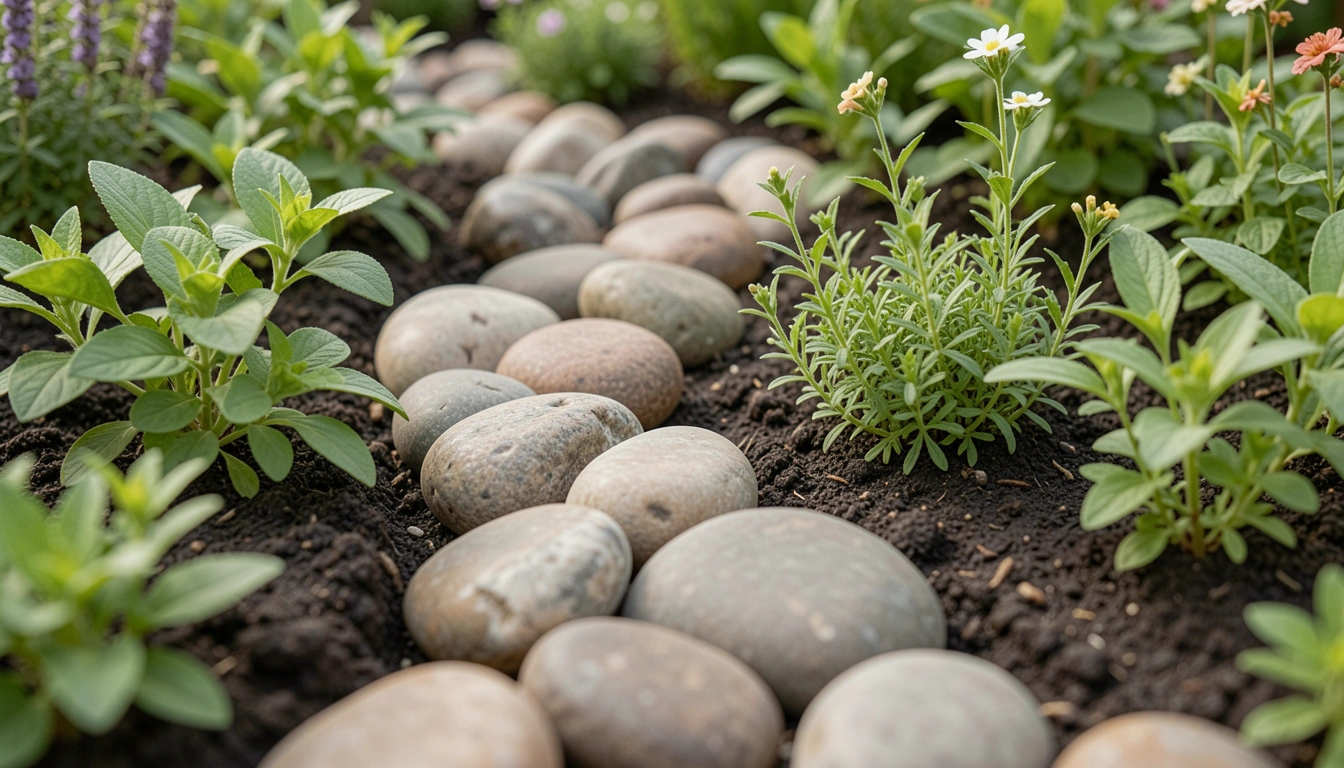
Last spring, my front bed edges had turned into a weedy blur. Grass crept in everywhere. I hauled home a bucket of smooth river rocks. Lining them along the curve stopped the invasion cold.
The garden felt grounded right away. Cleaner lines let the plants breathe.
Now, every time I walk by, it pulls me in. Simple rocks did that.
23 Rock Garden Edging Ideas for Natural Style
These 23 rock garden edging ideas come straight from my dirt-under-the-nails years. I've dug them in myself or fixed them in neighbor yards. Each one gives that natural border feel. Grab what fits your spot—no perfection needed.
1. Smooth River Rocks in a Shallow Trench
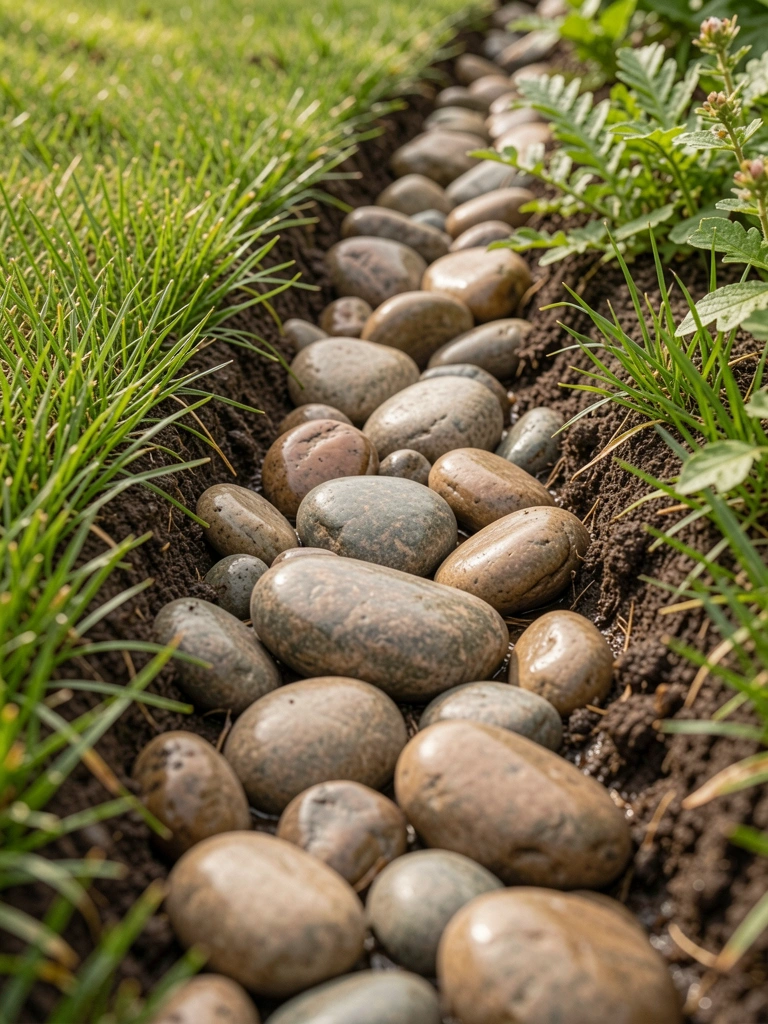
I dug a shallow trench along my walkway last year, just six inches deep. Dropped in smooth river rocks I'd collected from a local stream. They settled unevenly at first, but that's what made it look real—not stiff like plastic edging.
The rocks stopped grass from spilling over and gave the path a soft boundary. Walking on it now feels like stepping through a quiet creek bed. Flowers on one side pop against the gray tones.
Pay attention to rock size—mix mediums so they lock together. Wet them down after placing; they shift less as they dry.
What You’ll Need for This Look
2. Stacked Flat Fieldstones for Low Walls
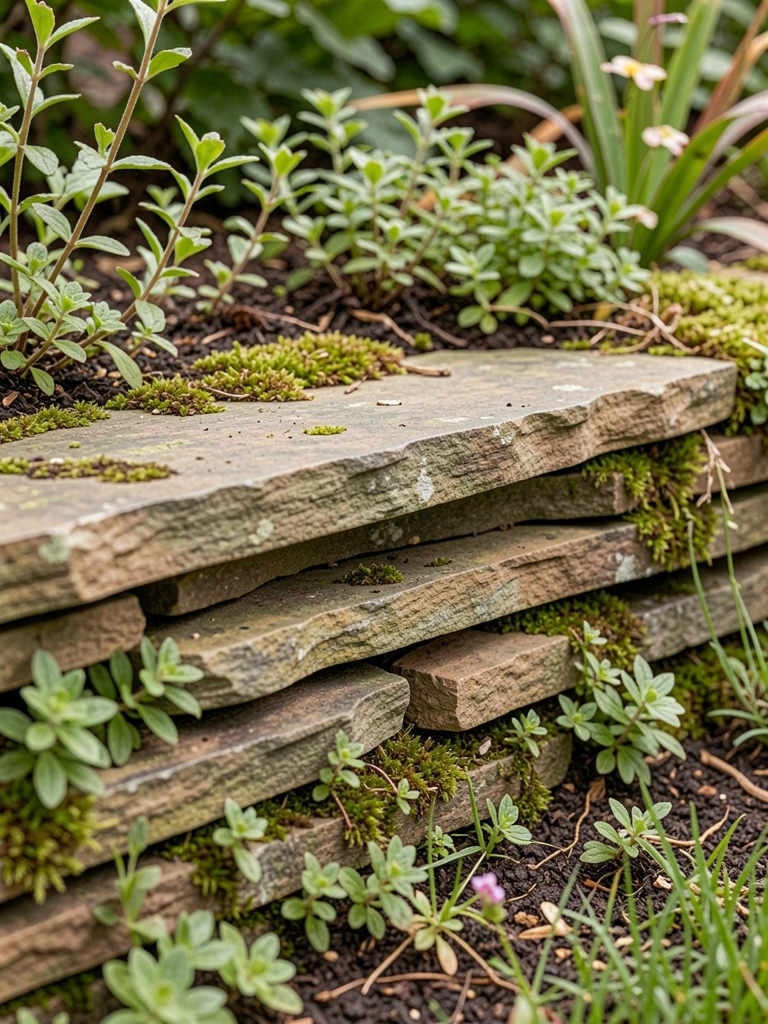
My side yard sloped awkwardly, so I stacked flat fieldstones into a knee-high edge. No mortar—just gravity and a bit of soil wedged in gaps. It took an afternoon of trial-stacking to get them steady.
Now, it holds back soil perfectly, and thyme creeps over the top. The wall adds quiet depth to the yard, framing perennials without shouting.
Start with larger base stones; smaller ones wobble up top. Tamp soil behind for support.
What You’ll Need for This Look
3. Large Boulders Clustered at Bed Corners
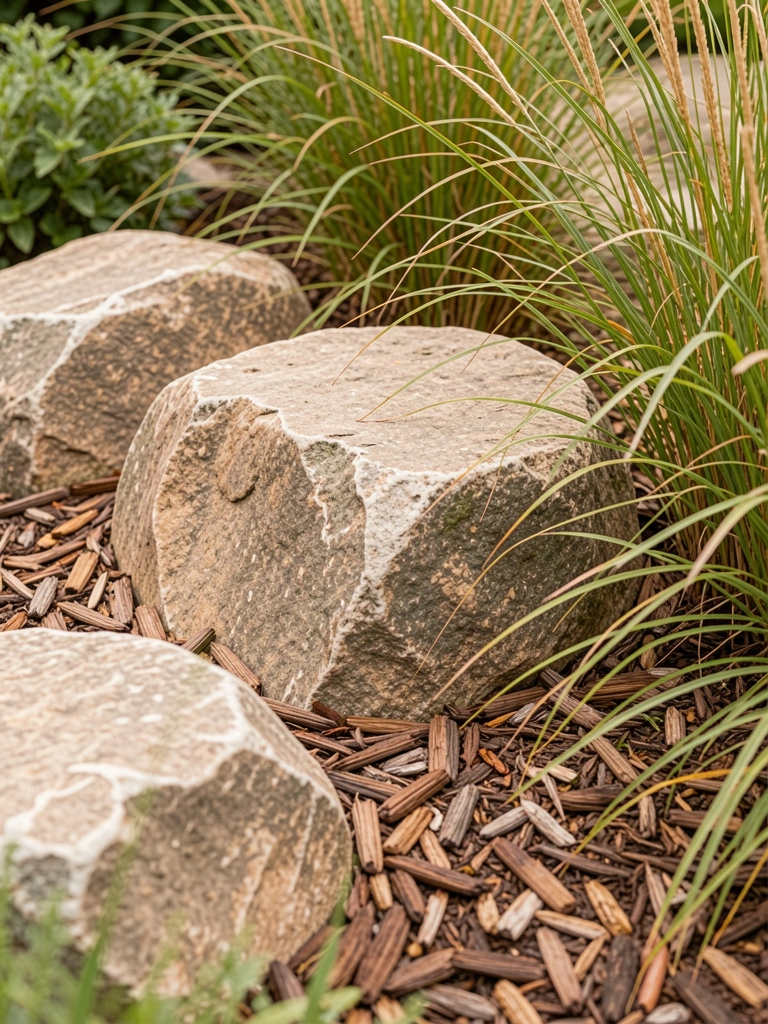
I placed three big boulders at the corners of my veggie bed. Sourced them cheap from a quarry pile. They anchor the space, making the whole bed feel established overnight.
No more loose dirt edges—boulders define turns sharply. Grasses sway around them, softening the bulk.
Dig them in half their height for stability. Cluster odd numbers for natural flow.
What You’ll Need for This Look
4. Gravel-Filled Rock Border with Drainage
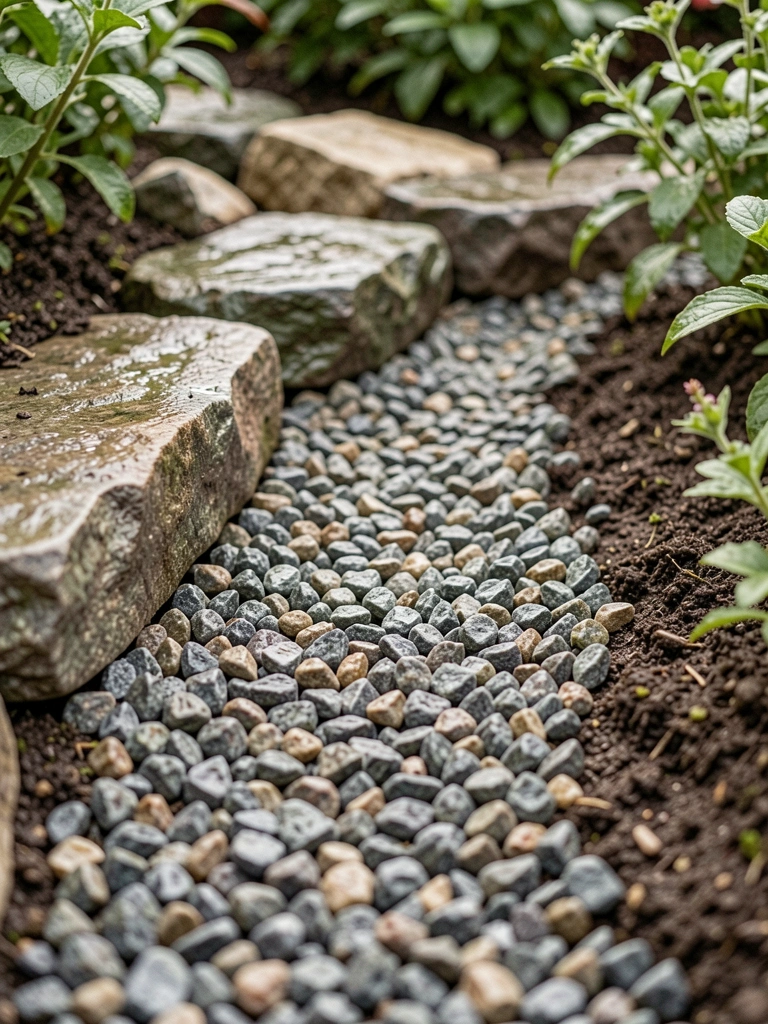
Rain used to pool at my flower bed edge, rotting roots. I lined it with larger rocks, backfilled pea gravel. Water drains fast now, roots stay happy.
The mix looks textured, like a dry riverbed. It edges cleanly without weeds taking hold.
Layer gravel deep—three inches minimum. Top with finer rocks for grip.
What You’ll Need for This Look
5. Mossy Rocks Wedged into Soft Curves
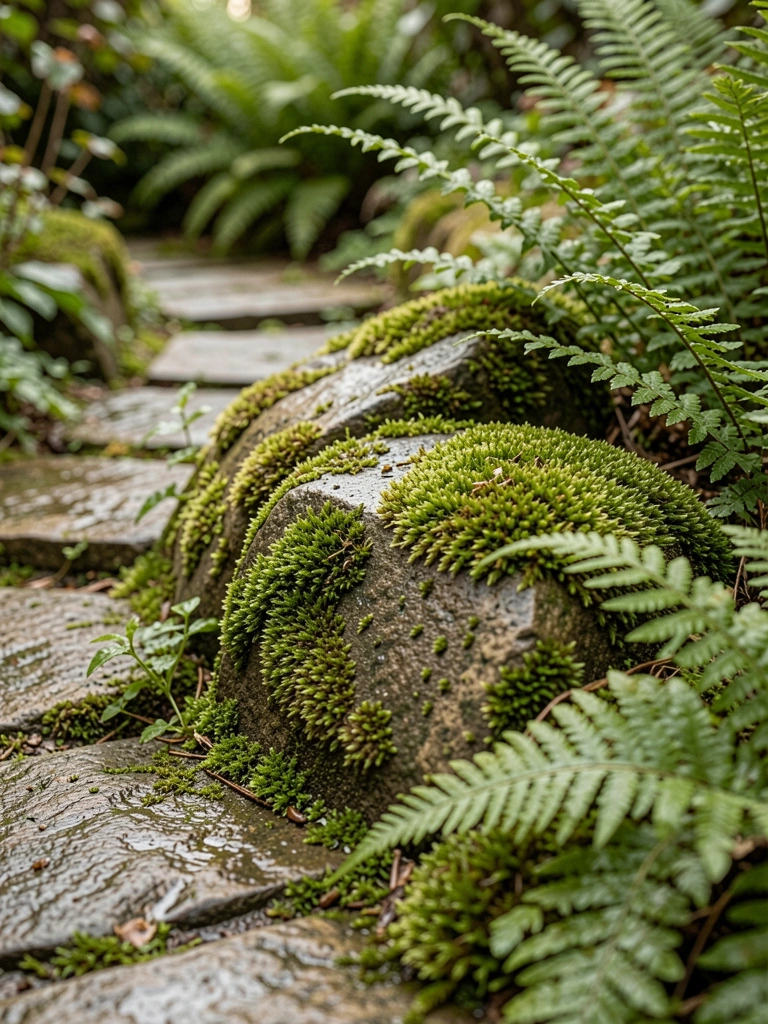
I wedged mossy rocks into a curving path edge, thinking it'd stay green forever. Mistake—direct sun dried half the moss. Live and learn; now I mist it weekly.
The curves invite slow walks, moss adds that soft, forest touch. It holds soil back gently.
Harvest moss from shady spots nearby. Curve loosely—no sharp bends.
What You’ll Need for This Look
6. Vertical Slate Slabs for Clean Lines
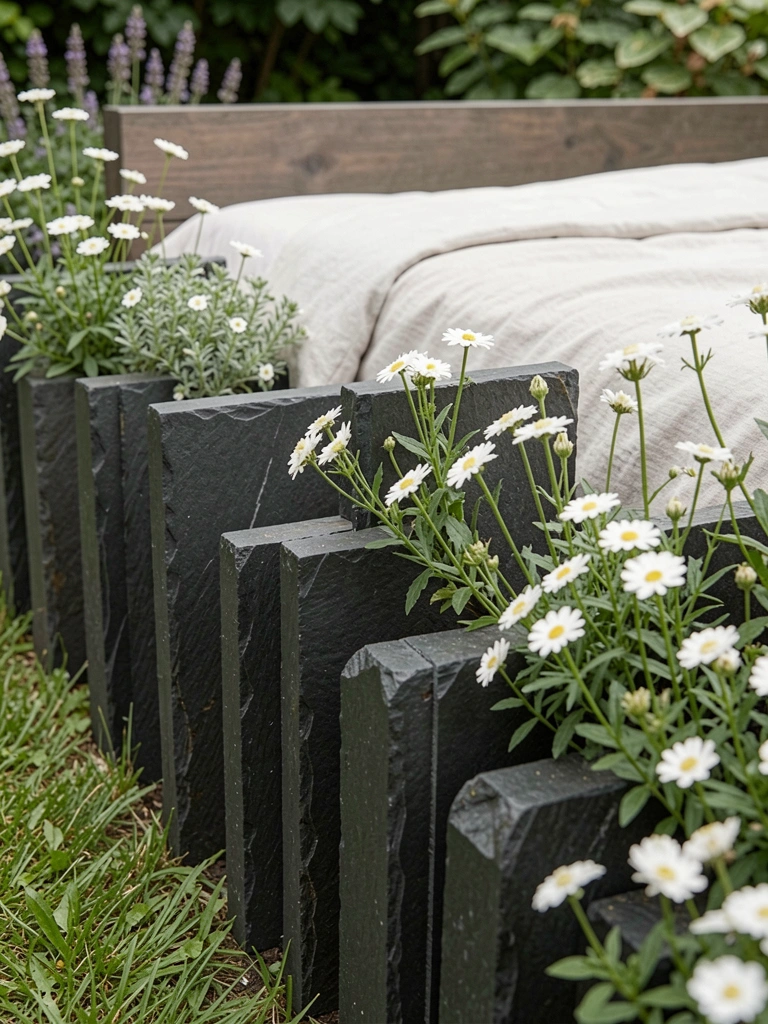
Slate slabs pounded vertically gave my herb bed crisp edges. Buried a third deep, they stand firm against foot traffic.
The dark slate contrasts herbs' greens, making small plants look tidy. Feels modern but grounded.
Choose thin slabs—easier to drive in. Space them tight.
What You’ll Need for This Look
7. Pebble Mosaic Inset Edges
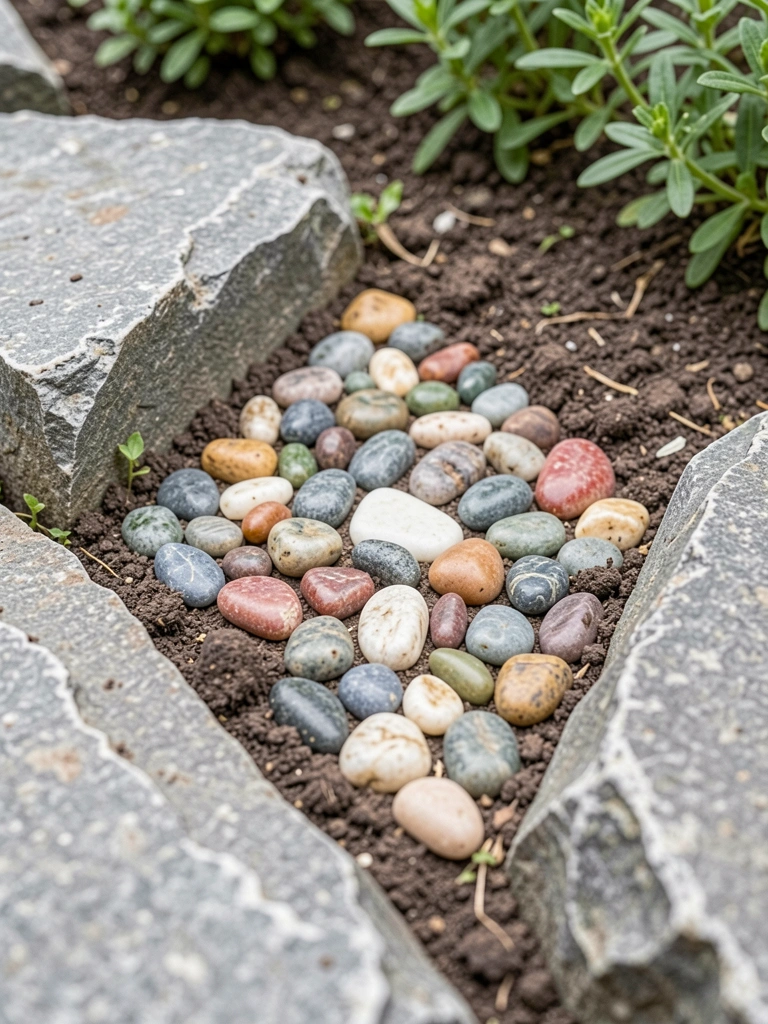
I set pebbles into a mortar base along my patio edge, mixing river rocks around. Subtle pattern emerged, drawing eyes without overwhelming.
It edges firmly, pebbles lock in place. Adds quiet interest to plain stone.
Use outdoor mortar; regular cracks outdoors. Press pebbles deep.
What You’ll Need for This Look
8. Limestone Chips in Wavy Borders
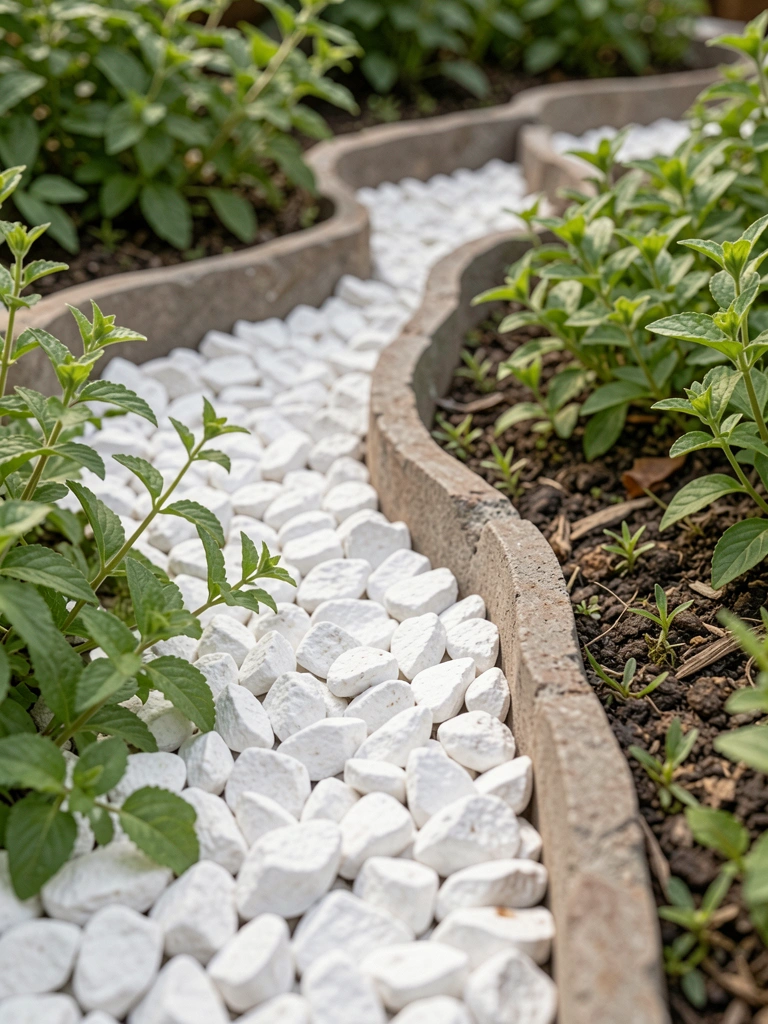
White limestone chips in a wavy line brightened my shady bed. Easy to rake smooth after rain.
Waves mimic natural contours, chips reflect light softly. Weeds struggle to root.
Dump and rake—no digging needed. Refresh yearly.
What You’ll Need for This Look
9. Granite Cobbles for Rustic Paths
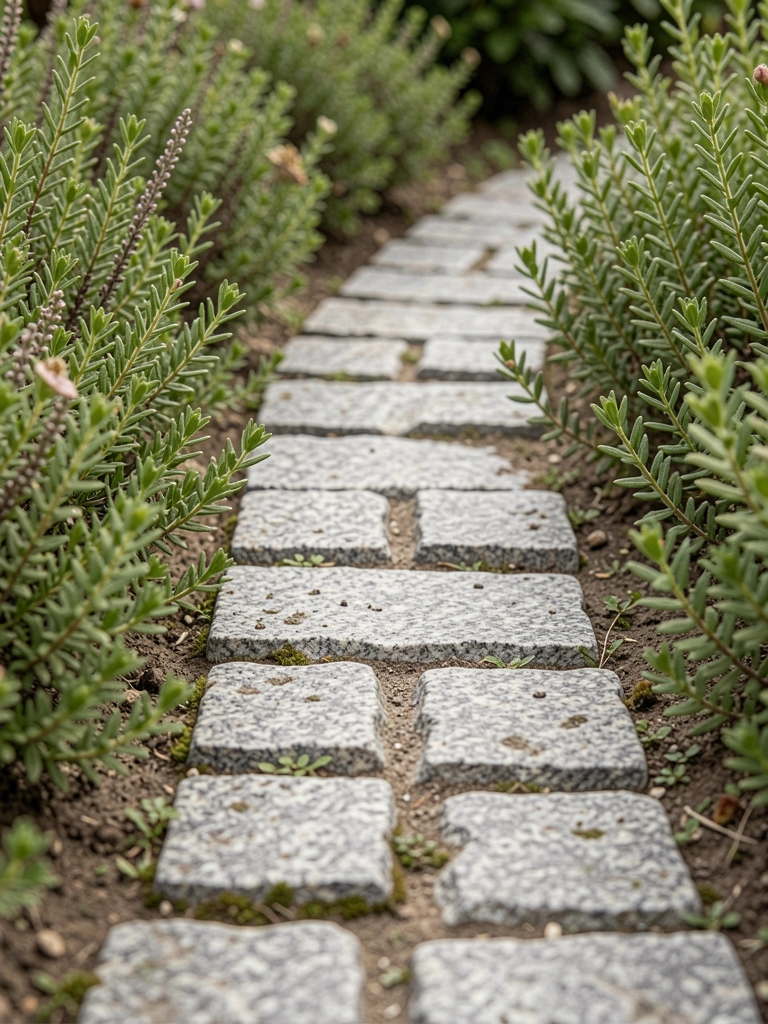
Granite cobbles line my back path, rough texture underfoot. Butted them close for a seamless edge.
Path feels old-world cozy, cobbles shed water well. Shrubs tuck in nicely.
Source local for color match. Butt ends tight.
What You’ll Need for This Look
10. Sandstone Layers Stepped Down Slopes
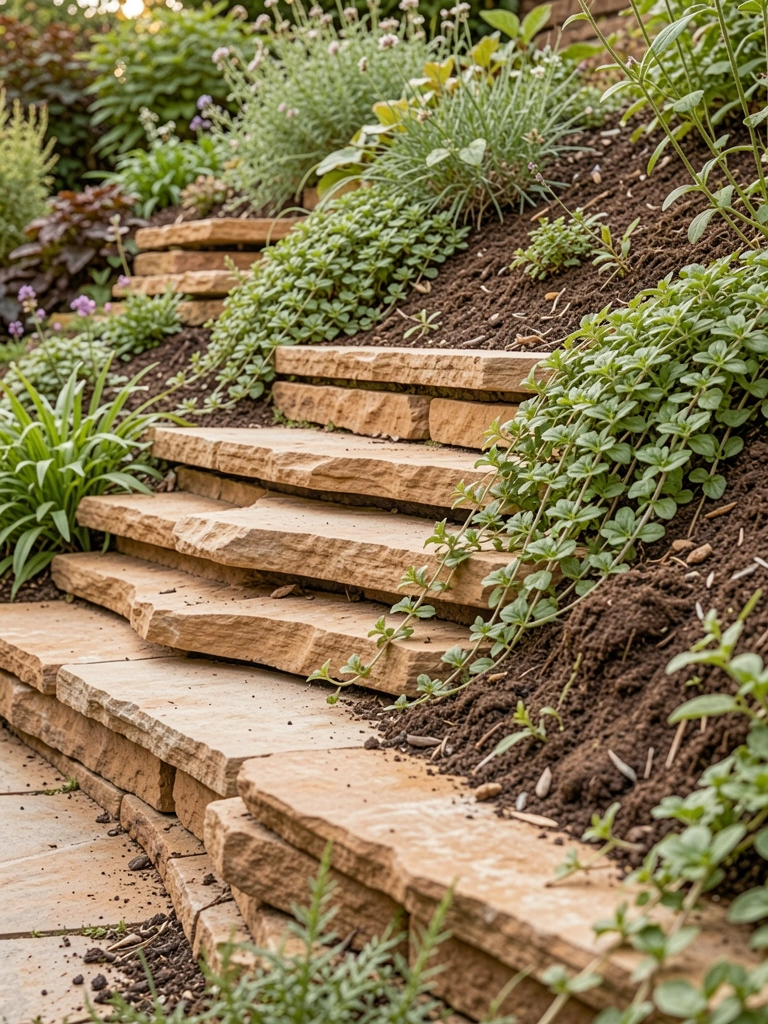
On my slope, layered sandstone steps the edge down gently. Each layer overlaps slightly for hold.
Sedum spills over, softening stone. Slope stays put, no erosion.
Overlaps prevent slips. Plant trailers immediately.
What You’ll Need for This Look
11. Boulder Clusters with Creeping Phlox
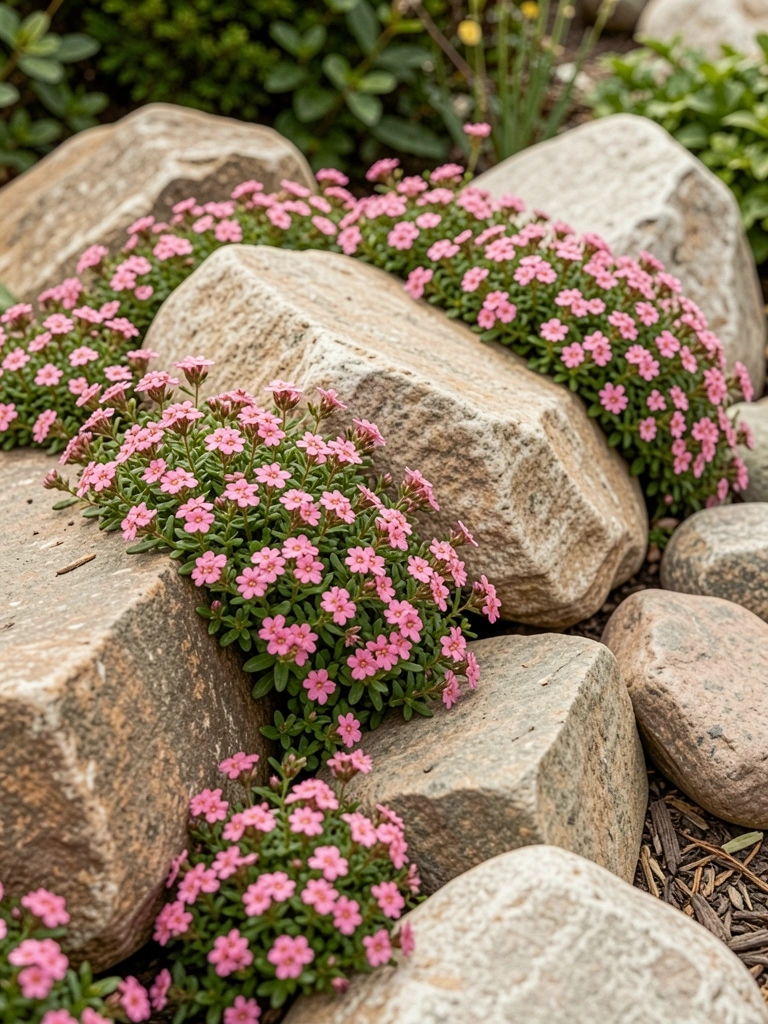
Clustered boulders with phlox threading gaps edge my front bed. Phlox blooms hide boulder bases.
Spring pink against gray warms the yard. Edges feel alive, not static.
Plant phlox shallow; it roots fast. Cluster boulders loosely.
What You’ll Need for This Look
12. Rock Ledges for Terraced Beds
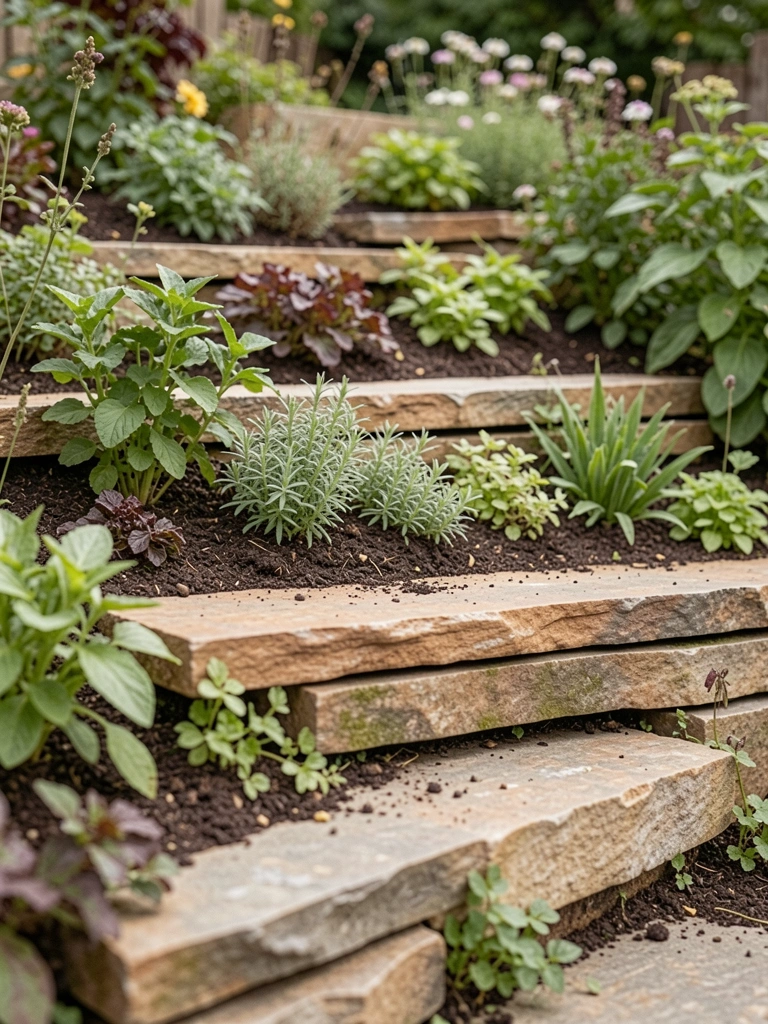
Terraced my hillside with rock ledges—too shallow at first, soil washed out. Added deeper backfill next time.
Now tiers hold herbs level, easy to reach. Yard feels roomier.
Dig wide bases. Backfill heavy.
What You’ll Need for This Look
13. Circular Rock Rings Around Trees
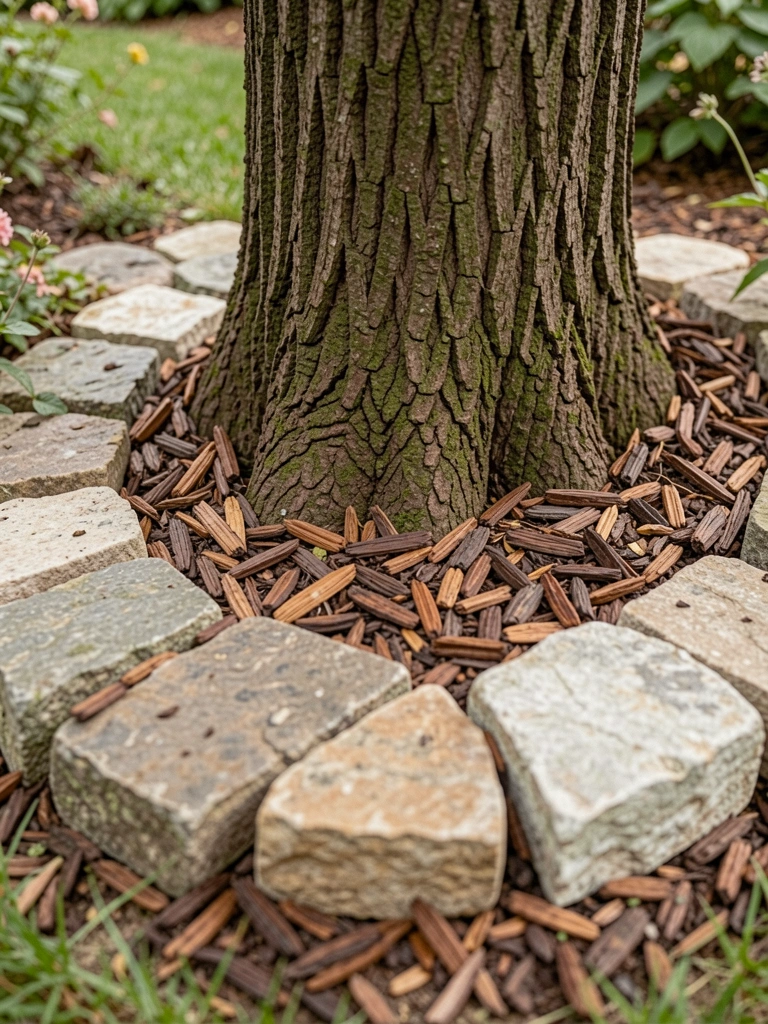
Rocks in a loose circle around my oak keep mower away. Mulch inside stays clean.
Tree base looks protected, circle guides eyes outward. No grass competition.
Keep ring wide—three feet minimum. Mulch deep.
What You’ll Need for This Look
14. Zigzag Limestone Lines for Interest
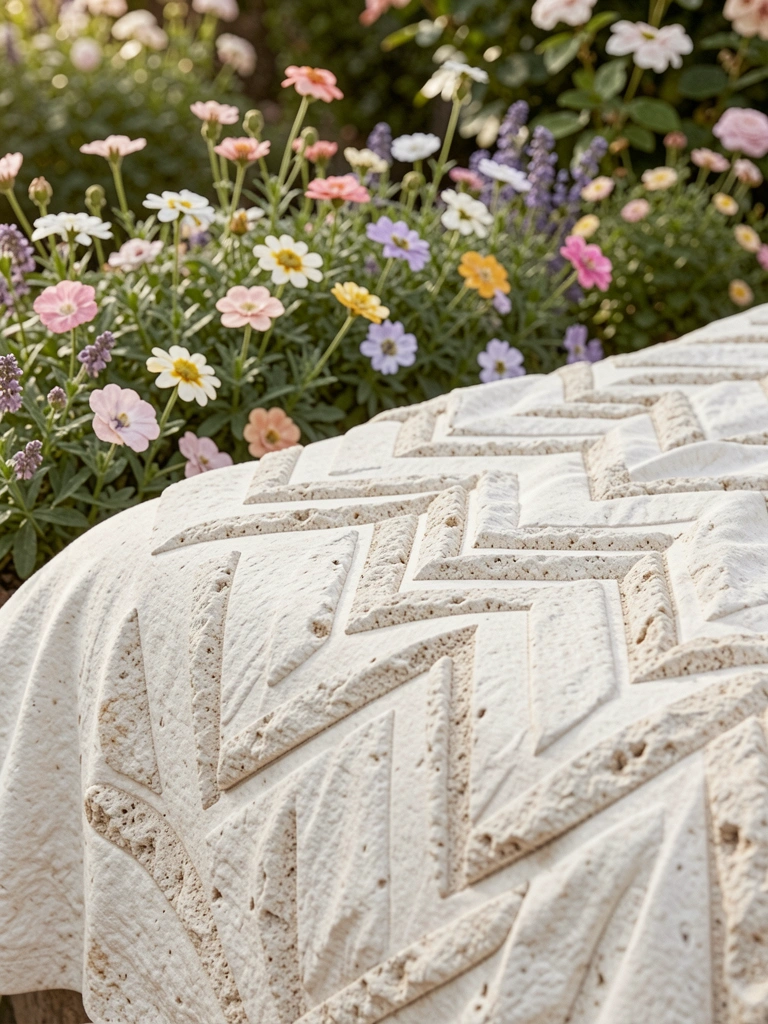
Zigzag limestone broke up my straight bed line. Adds movement without chaos.
Flowers nestle in zigs, line draws you along. Feels playful yet contained.
Vary zig depth. Set low for mowing.
What You’ll Need for This Look
15. Sunken Gravel and Rock Trenches
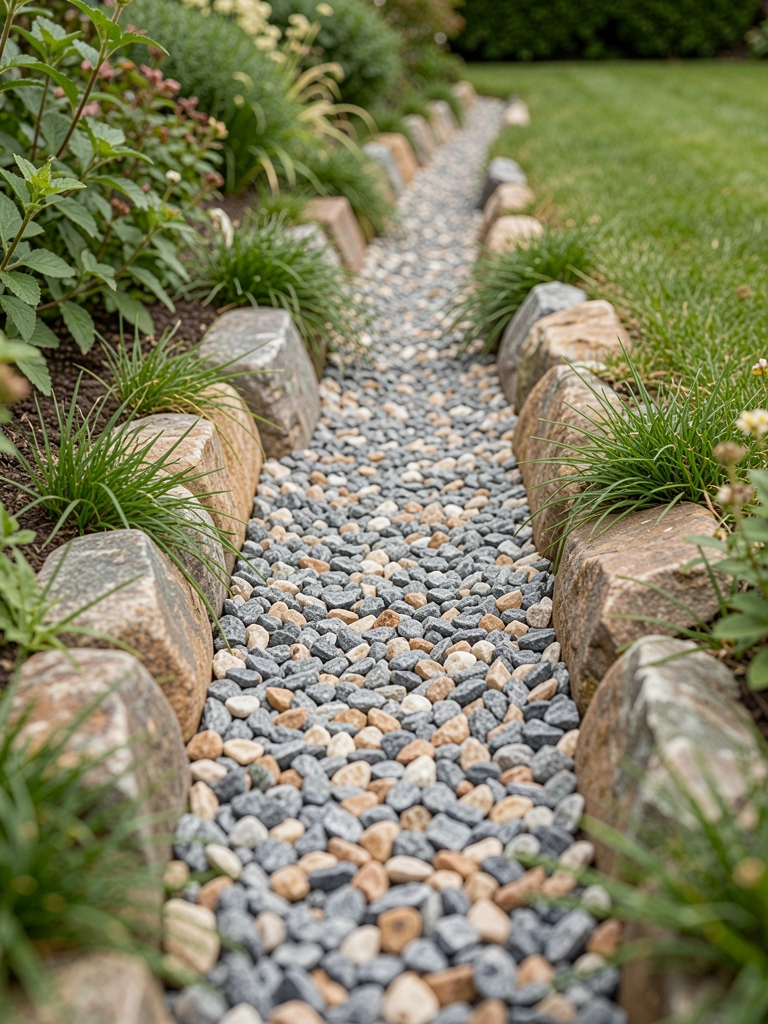
Sunken trenches with rock sides, gravel fill, swallow weeds whole. Low profile blends in.
Lawn edges sharp, trench drains excess water. Yard stays dry-footed.
Dig even depth. Gravel to top.
What You’ll Need for This Look
16. Weathered Slate Pieces in Irregular Rows
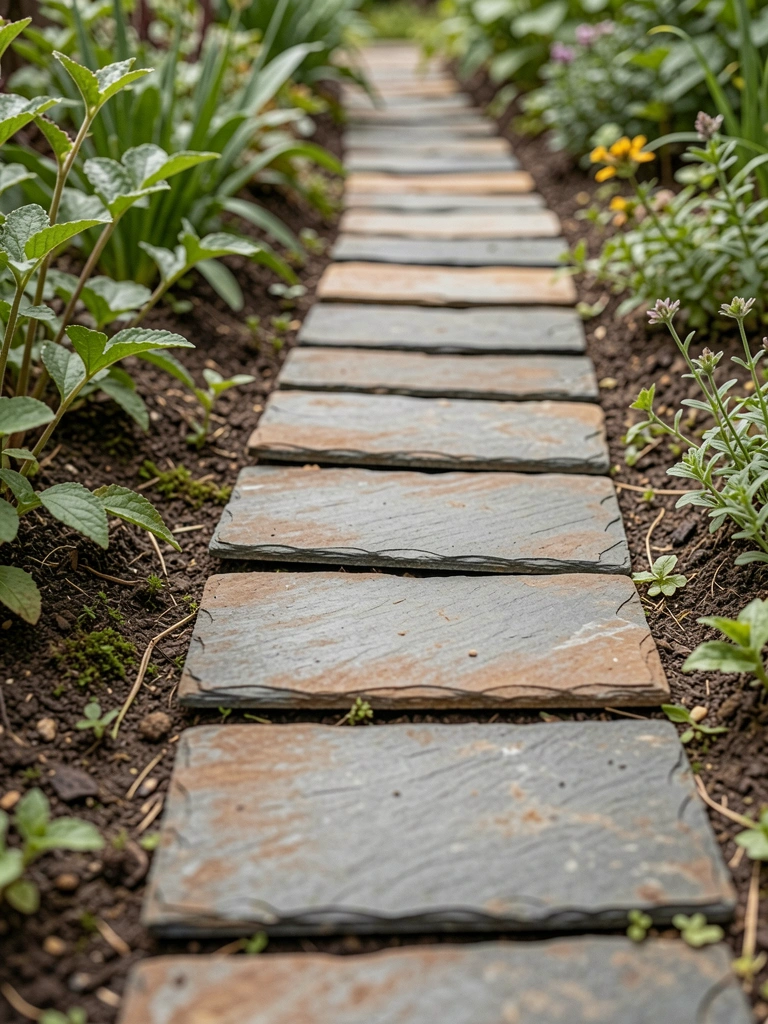
Irregular slate rows edge my shade bed, pieces vary in height for texture.
Slate weathers to silver, blends with hostas. Edges feel hand-placed.
Overlap slightly. No straight lines.
What You’ll Need for This Look
17. Lava Rock for Dry, Warm Edges
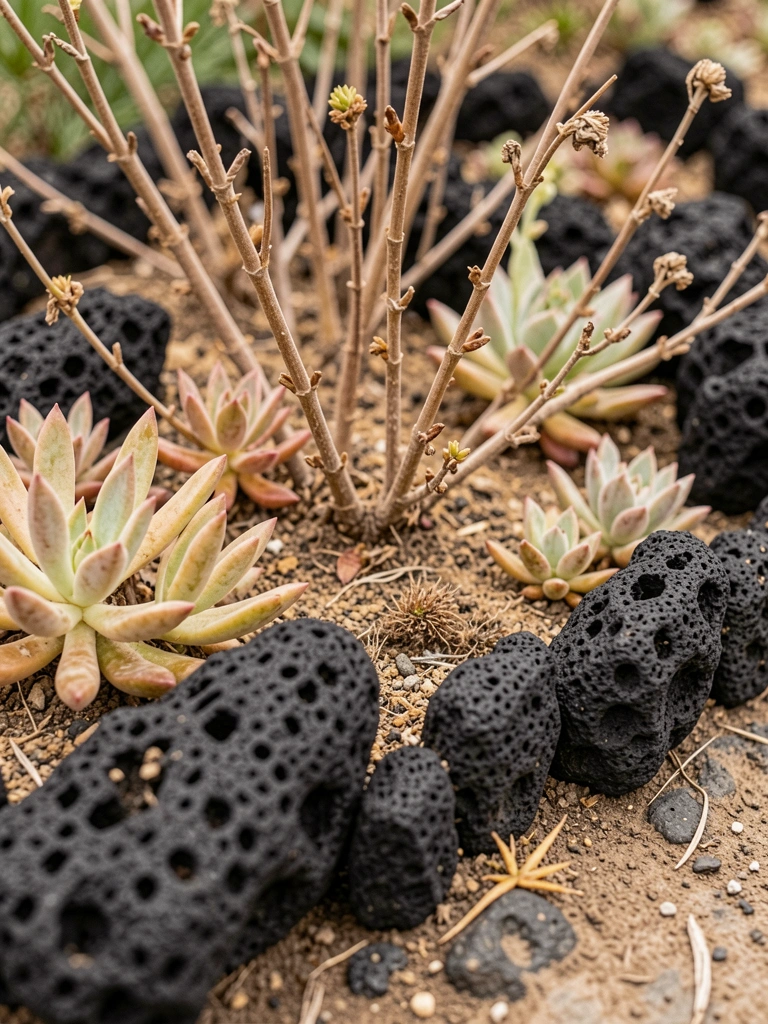
Lava rock edges my succulent bed, porous black holds heat, warms roots.
Contrasts green pads sharply, low water needs match. Desert feel in suburbia.
Rinse dust first. Layer two inches.
What You’ll Need for This Look
18. Quartzite White Rocks for Bright Borders
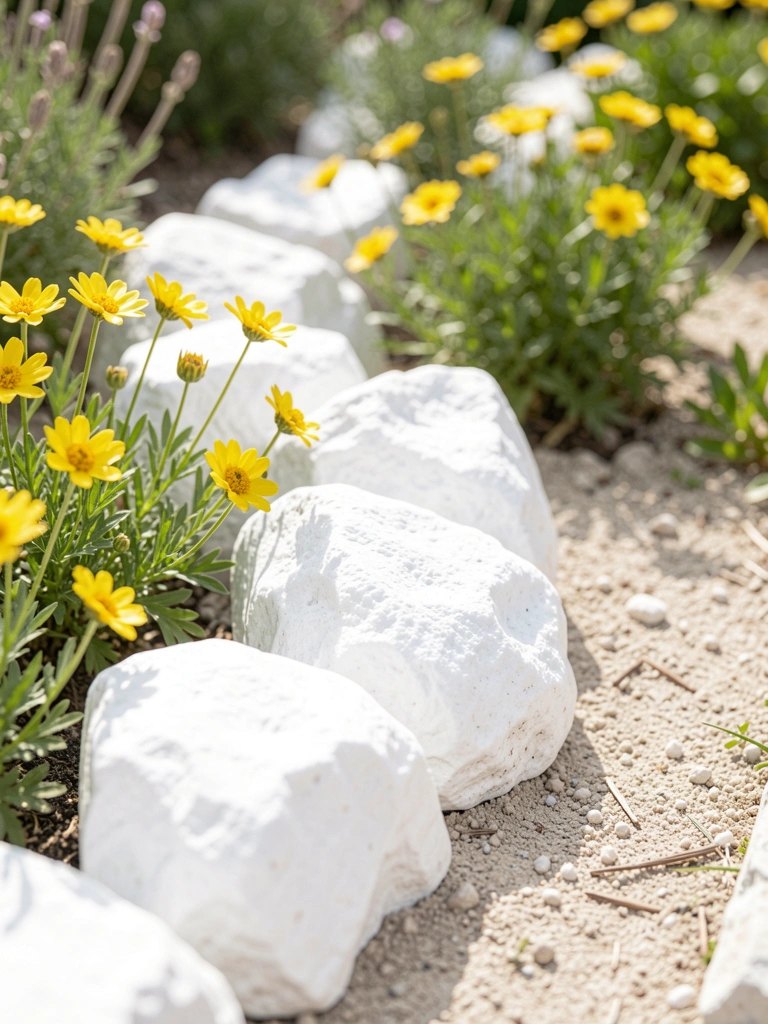
White quartzite lit my dark corner bed. Too bright at first—toned with dirt wash.
Now glows softly, makes yellow blooms sing. Edges pop in shade.
Bury half for subtlety. Hose clean yearly.
What You’ll Need for This Look
19. Mixed Rock Sizes for Textured Curves
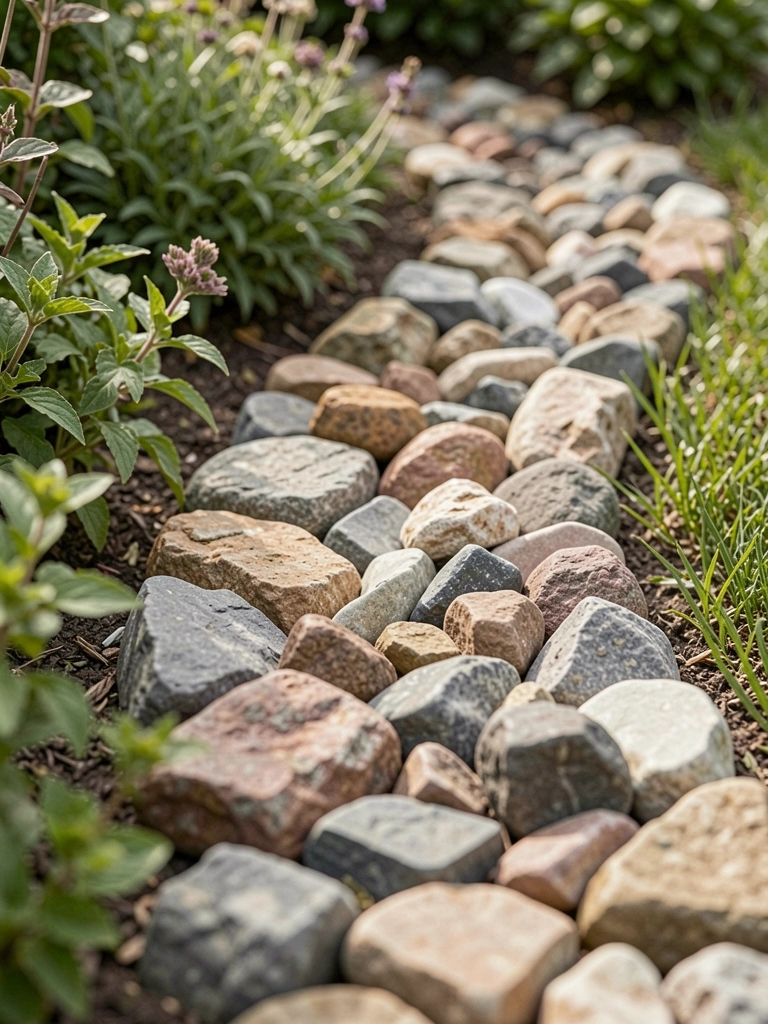
Mixed sizes curve my island bed, larges anchor, smalls fill.
Texture invites touch, curves flow with yard shape. Stable year-round.
Sort sizes first. Nest smalls tight.
What You’ll Need for This Look
20. Flat Rocks Over Linen Fabric Base
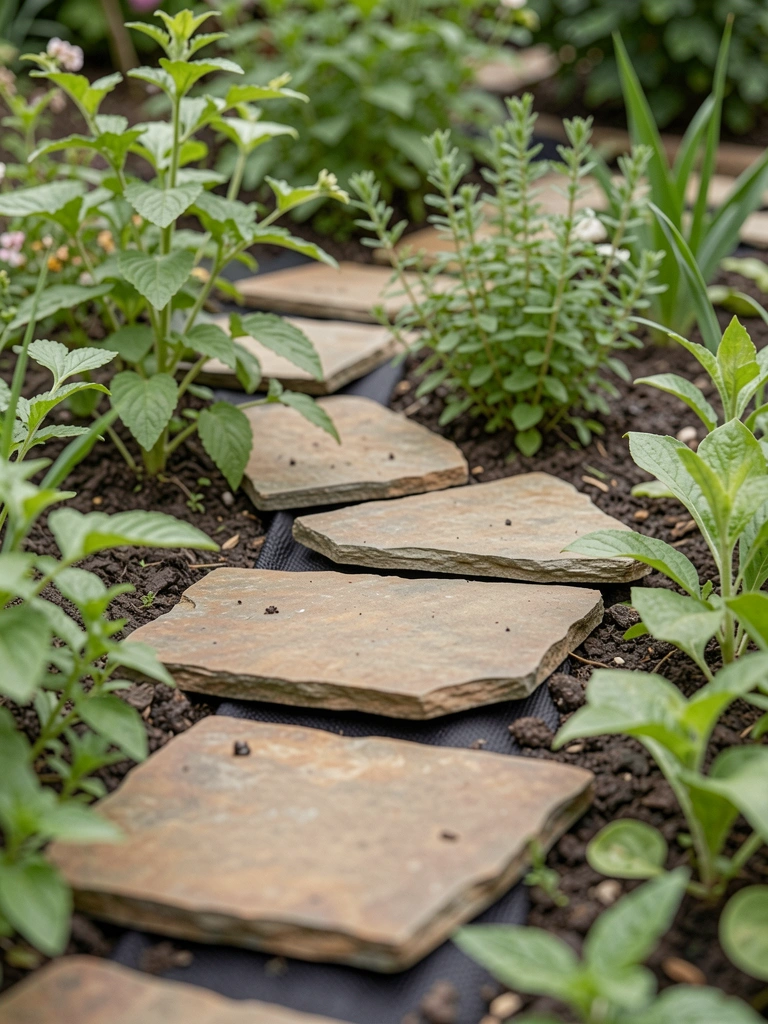
Fabric under flat rocks kills weeds long-term. Rocks sit secure atop.
Clean edges persist, fabric fades unseen. Low fuss forever.
Pin fabric well. Overlap seams.
What You’ll Need for This Look
21. Polished Pebbles for Subtle Modern Edges
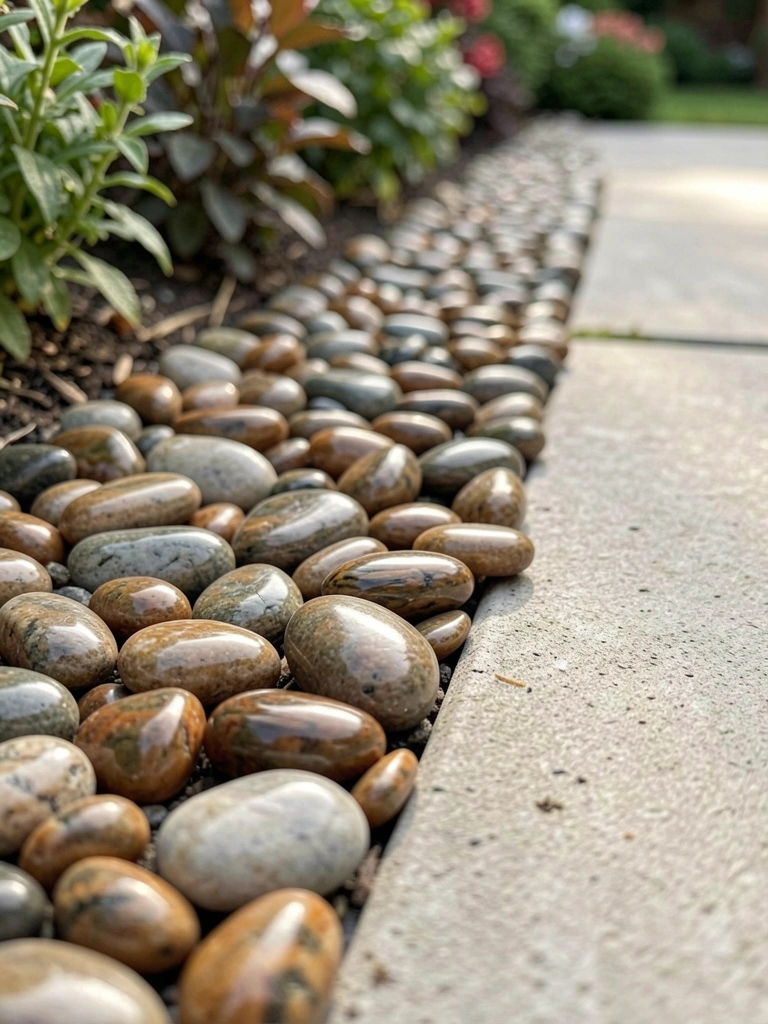
Polished pebbles edge my clean patio, subtle shine catches light.
Modern without coldness, pebbles shift minimally. Ties stone to green.
Rinse often. Thin layer suffices.
What You’ll Need for This Look
22. Stacked Rounds for Cottage Borders
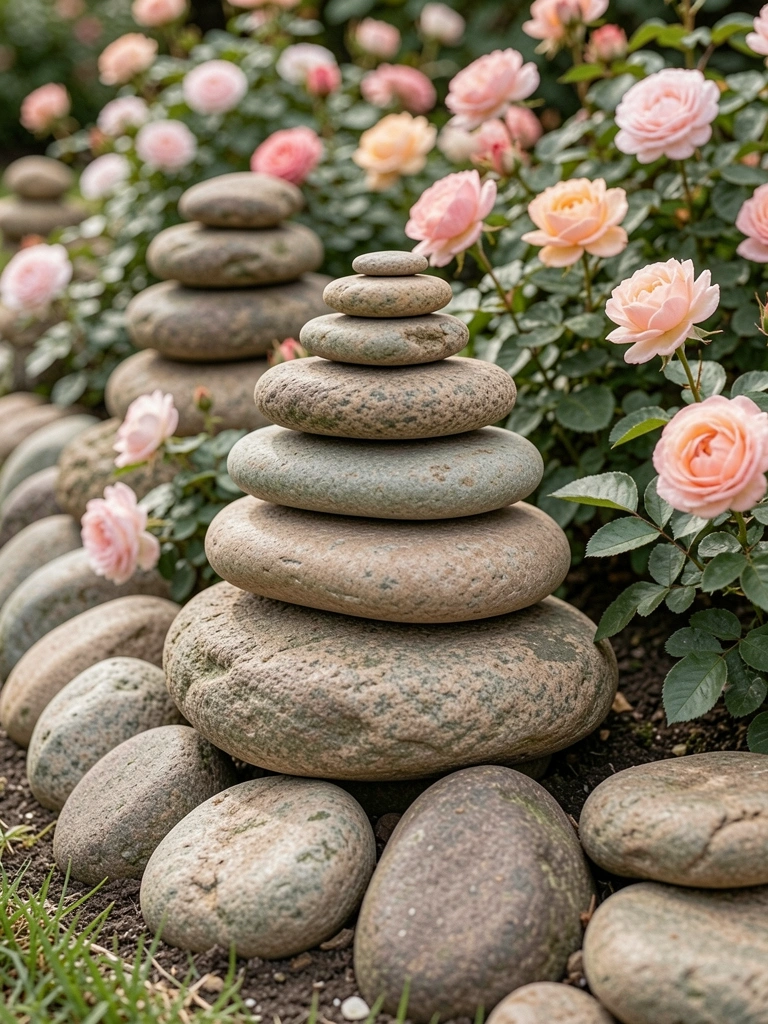
Round rocks stacked cottage-style border my roses. Low walls cup plants.
Feels homey, stacks lean slightly for charm. Holds mulch in.
Stack stable bases. Plant right away.
What You’ll Need for This Look
23. Chunky Flints for Wild Edges
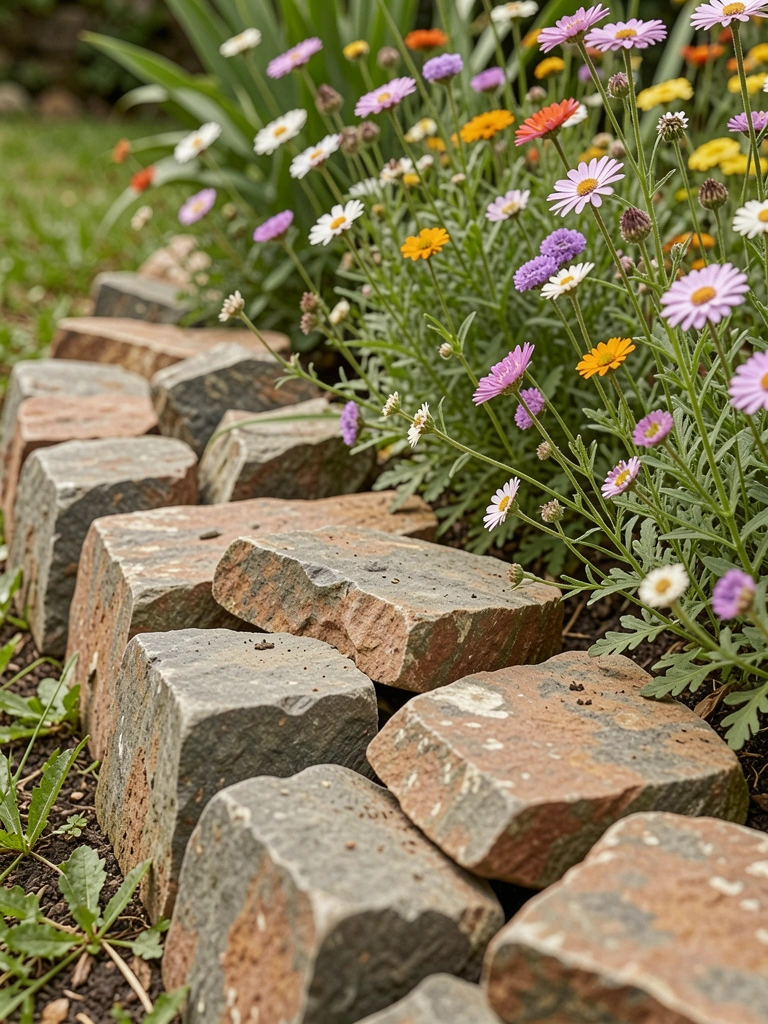
Chunky flints edge my wild bed—flipped some too soon, scattered. Rebuilt tighter.
Wild look matches flowers, flints gleam wet. Edges wander free.
Toss loosely first, adjust. Let settle.
What You’ll Need for This Look
Final Thoughts
Pick one or two ideas that match your yard's quirks. No need for all 23—start small, see how rocks settle.
They'll age into place, feeling more yours over time. You've got this; dirt and stones forgive mistakes.
Leave a Reply